Bottom line up front: an OK to wake clock can keep a child in bed until a set time, but only as a signal they have agreed to follow. It cannot make a child sleep later than their body needs, and I could not find a published trial testing these clocks, so every claim that they “work” is a parent report or a maker’s claim. In practice, a colour-change clock succeeds when the child is old enough to understand the rule, the wake time is realistic, and the rule has been practised and rewarded. Get those right and an inexpensive clock does the job. Get them wrong and no clock will.
What the clock actually does
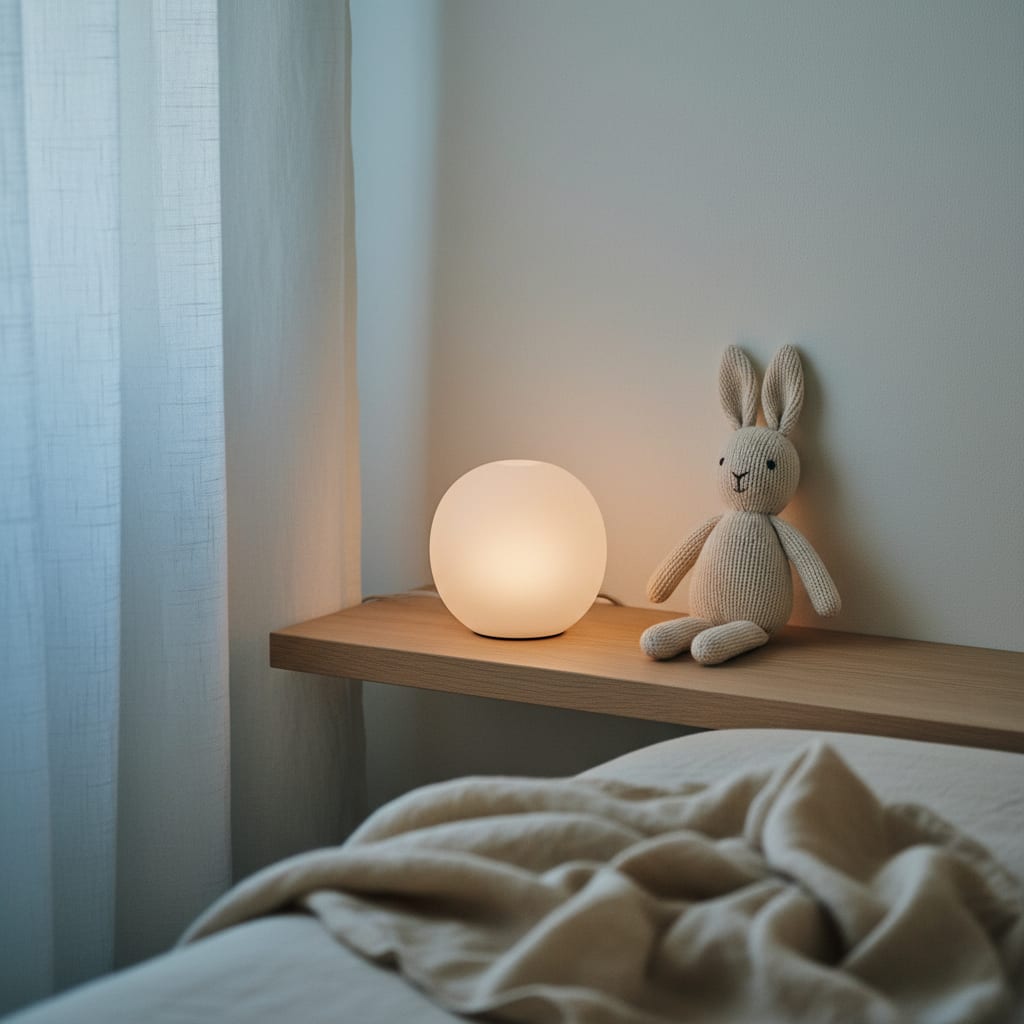
Every OK to wake clock does the same basic thing: it shows one colour or picture for “stay in bed” and another for “you can get up,” switching at a time you set. Some add a night light, sleep sounds, a nap timer or an app. None of them changes how long a child sleeps. What they change is what a child does once they are awake: get up and come looking for you, or wait quietly until the light changes.
A child who wakes at 5:45 and plays quietly until 6:30 has given you 45 minutes, but what you are teaching is a rule; the clock is only its reminder.
Check the sleep math before you buy
A clock cannot ask for more sleep than a child needs. The CDC, citing the American Academy of Sleep Medicine, gives recommended sleep of “11–14 hours (including naps)” for toddlers aged 1 to 2, and “10–13 hours (including naps)” for preschoolers aged 3 to 5.
So do the arithmetic before you set the time. Take a 2-year-old with a 2-hour nap and a 6:30 p.m. bedtime. A clock set to 7:00 a.m. is asking for 12.5 hours at night plus the nap, 14.5 hours in total. That is above the top of the range. That child is likely to wake well before the light changes, however much they want to obey it. Move bedtime later, trim the nap, or set the clock earlier, and the same clock suddenly starts to “work.”
Early light is the other common reason a child wakes before the clock. If sunrise is getting into the room, that comes first. My guide to blackout blinds a baby keeps pulling down covers the options that stay put.
How to set one up so it sticks
Hatch, which sells these clocks, publishes a setup routine that is sensible whichever brand you buy. Read it as a maker’s advice rather than research:
- Introduce it in the day. Show your child the clock and explain the two colours in one sentence each.
- Rehearse. Have your child lie in bed while the light shows “sleep,” then switch it to “wake” and celebrate getting up.
- Start close to the current wake time. Hatch’s example: “If your child normally wakes at 5, set the clock for a bit later (such as 5:30 or 5:45).”
- Reward early wins. Hatch suggests a sticker after “one or two mornings” of staying in bed.
- Move it later in steps. Push the time “to 6, 6:15, and then 6:30” as each step holds.
On age, Hatch says “around 18 months old, many toddlers begin to understand simple cause-and-effect cues” and that this is “a natural age to introduce” one. That is the maker’s view, and it is the earliest end of the range. Younger toddlers may like the light without connecting it to staying put, and the rule usually matters most once a child moves to a bed they can climb out of. Hatch’s own wording changes for children “in an open bed (three years and up).”
Four OK to wake clocks compared
Prices are from each maker’s own store on 23 October 2026.
| Clock | How it signals | Extras | Price (maker site) |
|---|---|---|---|
| Tommee Tippee Groclock | colours and symbols | nap time, optional digital clock face, optional alarm | sold out on Tommee Tippee’s US store |
| LittleHippo Mella | colours and a face that changes expression | 3 sleep sounds, 6 night-light colours, nap timer | $54.99 |
| Hatch Baby | colour light, set in the app | sound machine, night light, Hatch+ content | $79.99 with 3 months of Hatch+ |
| Yoto Player (3rd Gen) | clock and OK to wake light | audio player for stories and music | see my Yoto comparison |
The simple one: Tommee Tippee Groclock. Tommee Tippee’s page describes a clock that shows “the passing of time with colors and symbols,” lets you “set your sleep, nap and wake-up times,” and has an “optional digital clock face to help them learn to tell the time.” The display brightness can be turned “up, down or off,” and it runs from a USB cable at the wall. It was listed as sold out on Tommee Tippee’s US store when I checked, so the link goes to Amazon. For a child who just needs one clear rule, it is all you need.
The friendliest face: LittleHippo Mella. Mella “uses colors and facial expressions to teach bedtime and wake-up time,” which helps a child who is too young to read a clock face. It adds “three sleep sound options and six night light colors” and a nap timer, and it was $54.99 on littlehippo.com. If you do not already own a sound machine, the built-in sounds save buying a second device.
The app-connected one: Hatch Baby. Hatch’s current model is a sound machine and night light with a time-to-rise light, controlled from your phone. It was $79.99 on hatch.co with three months of the Hatch+ subscription included. My Hatch Rest review explains what the subscription adds and when a cheaper machine does the same job. As a clock alone it is the priciest colour change here; as a sound machine you wanted anyway, the clock is a free extra.
The one that also plays stories: Yoto Player. The Yoto Player (3rd Gen) has a clock and OK to wake light built in; my Yoto vs Toniebox comparison covers it. Buy it for the stories, not the clock.
What to look for, whichever you buy
- A signal a pre-reader can read. Colours or a face, not numbers alone.
- A dim or switch-off display. A bright clock face in a dark room is one more light to manage.
- A nap setting, if your child still naps.
- Settings a toddler cannot change. Put it out of reach if the buttons are on top.
- Plug-in power if you do not want to replace batteries.
When a clock is not the fix
If the clock is set to a realistic time, the room is dark and your child still cannot wait, look at the rest of the day: a nap that runs long, a bedtime that is too early, or a child who comes out in the night as well as the morning. Betteroo’s guide to handling a toddler who keeps getting out of bed covers the calm, repeated return that works alongside a clock. And if the real problem is a schedule that does not add up, Betteroo can build a bedtime and nap plan around your child’s age and wake time, which is the part no clock can do.
FAQ
Do OK to wake clocks actually work?
They work as a signal for a rule, not as a way to add sleep. I could not find a published trial on them. They tend to succeed when the child is old enough to follow the rule, the wake time fits the child’s sleep needs, and the routine is practised and rewarded.
What age should you start an OK to wake clock?
Hatch, which sells them, suggests around 18 months, when many toddlers understand simple cause-and-effect cues. They often matter most once a child moves to a bed they can get out of, which Hatch puts at three and up.
What time should I set the OK to wake clock?
Start 15 to 30 minutes after your child’s current wake time and move it later in small steps. Check the total against the CDC range: 11 to 14 hours including naps for ages 1 to 2, and 10 to 13 for ages 3 to 5.
Can you use an OK to wake clock for naps?
Yes, if the clock has a nap setting. The Groclock and Mella both list nap timing.