Bottom line up front: the Hatch Rest does everything it promises, and almost none of what it promises is about newborns. For a baby, it is a sound machine with a dimmable light — a job a $50 machine does identically. What you’re paying for is the app, the toddler time-to-rise clock and a growing content library, most of which now sits behind Hatch+ at around $4.99 a month or $49.99 a year. That’s a real product with a real audience. It is just not the sleep intervention the marketing implies.
I’ve had a Rest running in one room and a plain analog machine in the other for long enough to be unsentimental about the difference. Affiliate links never change my verdicts.
What you’re actually buying
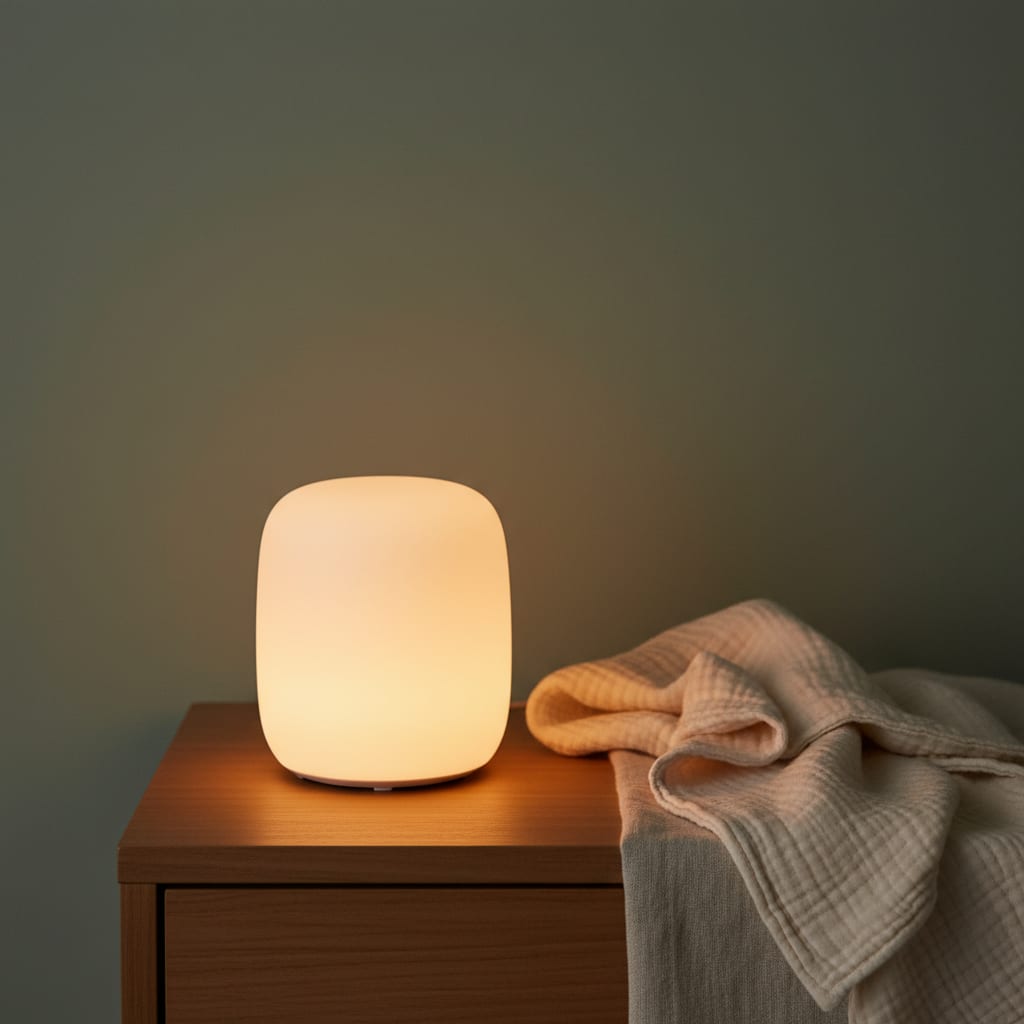
The Hatch Rest 2nd gen is a Wi-Fi-connected unit that combines three things in one hockey-puck-sized object: a sound machine, a color-adjustable nightlight, and a programmable clock that can turn a light green in the morning to tell a toddler it’s an acceptable hour to exist. It’s controlled from your phone, and it can also be operated by touch on the device itself.
There’s also a Hatch Rest+ 2nd gen with a charging base and a backup battery, which is the version to get if you want it to survive a power cut or travel to a grandparent’s house. If you’re never moving it off a nightstand, the extra spend buys you nothing.
Both ship with a Hatch+ trial. That trial is doing quiet, effective sales work, and it’s the part of this review I want to be most precise about.
The subscription question, answered plainly
Hatch+ costs roughly $4.99 monthly or $49.99 annually. It unlocks the premium library — additional sleep sounds, stories, meditations, weekly new content, and recorded “Tuck-Ins” from family members. Without it, you still get a workable handful of sounds and light colors, plus the core alarm, nightlight and time-to-rise functions.
So: the device is not bricked without a membership. That matters, and Hatch deserves credit for it. But two things are also true.
First, the free sound set is deliberately modest, and once a toddler has attached to a specific story or a specific rain track, cancelling is a conversation you have with a three-year-old rather than with a company.
Second, the annual membership costs about as much as an entire competent sound machine, every year. Over three years of use, the total is a genuinely different purchase from the one on the price tag.
| Setup | Rough up-front | Ongoing | Rough 3-year total |
|---|---|---|---|
| Rest 2nd gen, no membership | ~$70 | none | ~$70 |
| Rest 2nd gen + Hatch+ annual | ~$70 | ~$50/yr | ~$220 |
| Rest+ 2nd gen + Hatch+ annual | ~$90 | ~$50/yr | ~$240 |
| Yogasleep Dohm | ~$50 | none | ~$50 |
| LectroFan | ~$50 | none | ~$50 |
That bottom half of the table is the honest comparison for the first year. For the toddler years, there is no bottom half — no $50 machine gives you a scheduled wake-up light.
What worked in my house
The time-to-rise light is the actual feature. Around the two-and-a-half to three-year mark, a light that changes color at a set time converts an argument into a rule someone else made. It’s the one thing on this device I’d genuinely miss, and it’s why I’d keep a Rest even after being annoyed by the subscription.
Scheduling from bed is not nothing. Being able to dim a light, change a sound or extend a nap timer without opening a door is a small mercy at 5:40 a.m.
Build quality is good. Ours has survived being knocked off a shelf twice, plus a toddler who treats it as a percussion instrument.
The light is genuinely dimmable to a useful low. A lot of “nightlights” only go down to bright. This one goes down to a warm, low glow that doesn’t wash out a small room.
What didn’t
Wi-Fi introduces failure modes a $25 machine doesn’t have. App updates, router changes and re-pairing are all things I have now done at bedtime, which is the exact moment you don’t want a device to be clever.
Volume needs a deliberate hand. Research on infant sound machines has flagged that at maximum volume and short distances, some units produce sound levels that would be considered excessive for sustained exposure. The practical rules are boring and unchanged: put it across the room rather than in the crib, run it well below maximum, and don’t leave it screaming all night. I go into the measurements in my white noise machine testing, and the conclusion there applies to this device too.
The nightlight is a habit you may not want. A color-changing light is fun, and fun is stimulating. For a baby, dark is still the correct setting.
The premium library is aimed at your wallet’s future. New content weekly is a retention feature, not a sleep feature.
Who should actually buy it
Buy the Rest if you have a toddler approaching the “is it morning yet” phase, or if you know you’ll use the scheduling. Buy the Rest+ if it needs to travel or survive outages.
Skip it if your baby is under a year and you’re buying it for sleep. At that age the machine is a noise source, and the important variables sit elsewhere — the room, the routine, the schedule. My nursery temperature guide covers the one I see missed most often, and Betteroo’s rundown of what to look for in a baby sound machine is a good sanity check before you spend at this tier.
If the actual problem is that nothing you’ve bought has changed how the nights go, gear is the wrong lever — the same verdict I landed on with the four-figure bassinet everyone asks about. A structured, age-matched plan — the kind Betteroo’s quiz builds in a couple of minutes — costs less than three years of memberships and addresses the thing the light was never going to.
FAQ
Do you need a subscription for the Hatch Rest to work?
No. The Rest works as a sound machine, nightlight and time-to-rise clock without Hatch+. The membership adds a larger library of sounds, stories and meditations plus recorded Tuck-Ins, and Hatch releases new content to members regularly. Decide before the trial ends, because the easiest time to not subscribe is before a toddler picks a favorite track.
Is the Hatch Rest worth it for a newborn?
For the baby’s sleep, no — a simple continuous-sound machine does the same job for less. The Rest earns its price in the toddler years, when the wake-up light and scheduling start mattering. If you’re buying during pregnancy, it’s reasonable to buy it knowing you’re buying for year two.
Hatch Rest or Hatch Rest+?
Get the Rest+ if you need portability or a backup battery — travel, power cuts, a unit that moves between rooms. Otherwise the standard Rest is the same core device without the charging base, and the difference is better spent elsewhere.
How loud should a sound machine be in a nursery?
Lower than most people run it, and further away than most people put it. Across the room, at a level where you can hold a normal conversation over it, is a sensible default. Continuous sound at high volume all night, inches from a crib, is the setup worth avoiding.
Does the Hatch Rest help with early waking?
Indirectly, and only for toddlers. The time-to-rise light gives an over-two-year-old a rule they can see, which helps if the child is capable of waiting. It does nothing for an infant waking at 5 a.m., because that’s a schedule problem rather than an information problem.
Final word
Three stars. It’s a good object doing a modest job at a premium price, with a membership that quietly doubles the three-year cost. I’d buy it again for the toddler wake-up light — and I’d tell any first-time parent shopping for a newborn to buy a $50 machine and put the difference toward something that changes the night.