Bottom line up front: after a year of daily use, my Mockingbird stroller review lands at a confident recommendation — it does roughly 85 percent of what the four-figure flagship strollers do, for somewhere around $500, and the single-to-double conversion is the real deal. The push is smooth on decent surfaces, the basket is enormous, and the second-seat expansion cost me a kit rather than a new stroller when kid two arrived. The honest asterisks: it’s not the stroller for rough terrain, the fold is unremarkable, and the brand’s 2022 frame recall deserves a straight answer, which I give below.
I bought mine with my own money before the brand ever knew this site existed, and affiliate links never change my verdicts.
What the Mockingbird is
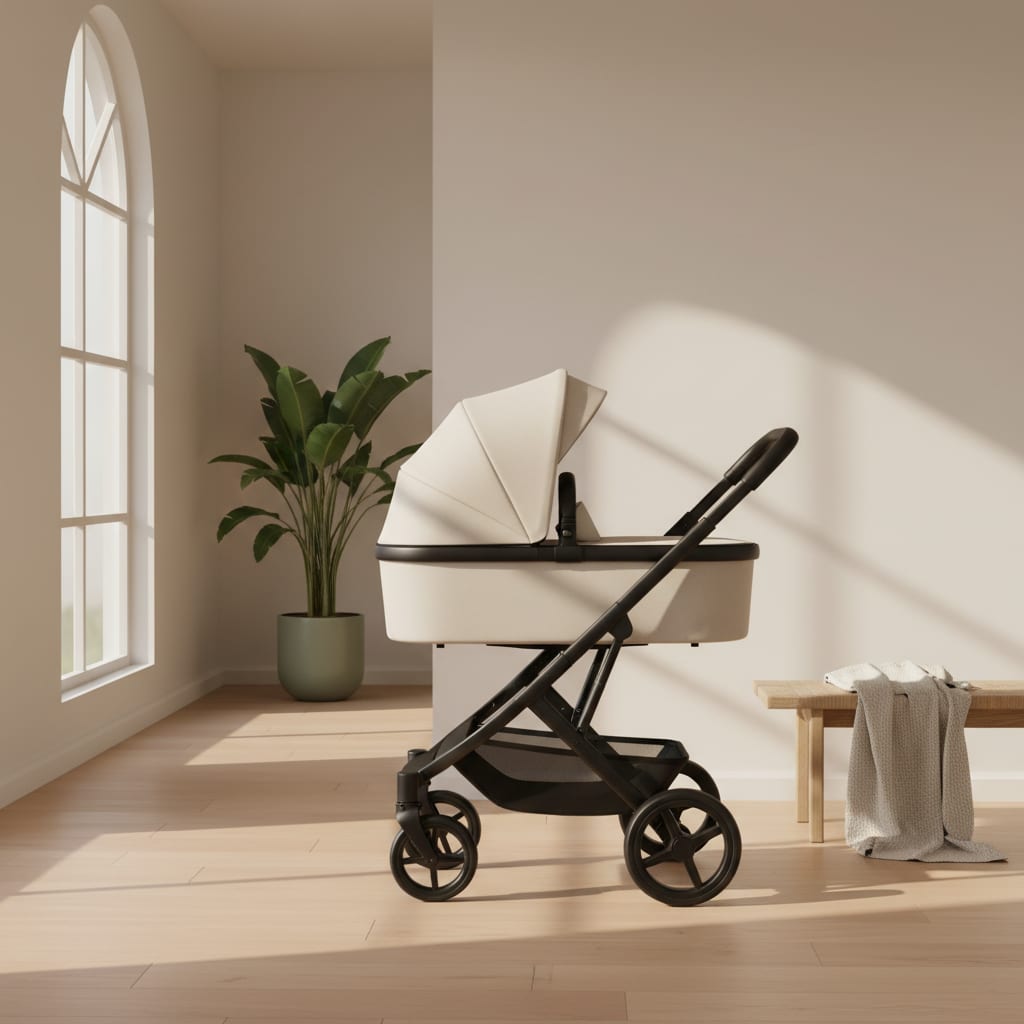
Mockingbird is a direct-to-consumer stroller brand with one core product: the Single-to-Double, a full-size stroller that runs around $500 and expands from one seat to two with a second-seat kit (sold separately, roughly $200). The DTC math is the whole pitch — comparable convertible flagships from the premium brands run around twice the price before you add their second seats. You’re trading the showroom, the resale cachet and some refinement for a very large price gap.
A year of daily use: what held up
The push. On pavement, sidewalks and store aisles — which is to say, real stroller life — the ride is smooth and the handling is genuinely good. One-handed steering is manageable in single mode. Loaded up in double mode it pushes heavier and you feel the length in tight corners, which is true of every tandem double I’ve tried.
The basket. Enormous, easily one of the biggest in the class. It swallowed a full grocery run plus the diaper bag — my whole diaper bag load-out — with room left. This is the feature I’d miss most.
The conversion. Adding the second seat when my second arrived took minutes, and the seating configurations (both kids, seat plus infant setup, riding board for a standing toddler) cover the actual permutations of a two-kid outing. This is the reason to buy this stroller. A double that starts as an affordable single is exactly what my registry philosophy says to buy once — buy the growth path, not the moment — a theme that runs through my minimalist registry checklist.
Wear. After a year: fabric has washed well, wheels show normal wear, no frame issues on my post-recall unit, some cosmetic scuffing on the frame from car-trunk life. Nothing that affects function.
What I’d tell a friend before buying
The recall, honestly. In late 2022 Mockingbird recalled Single-to-Double frames after reports of cracking, and shipped reinforcement brackets to existing owners; current production includes the fix. Two things can be true: a frame-cracking recall on a stroller brand’s only product is genuinely alarming, and the company’s response — free reinforcement kits, updated production — was the responsible version of handling it. Buying today, you’re getting the post-fix design. Buying secondhand, verify the reinforcement is installed before any child rides in it.
The terrain limits. This is a pavement-and-parks stroller. Grass and packed gravel are fine; beach, trails and serious off-road are not its job. If your life is genuinely all-terrain, you want a different tool — possibly a wagon, which I cover in my stroller wagon roundup.
The fold. It folds flat and fits a normal trunk, but it’s a two-hand affair and the double configuration makes a big package. If your life is constant car transfers and tight urban trunks, a dedicated lightweight stroller earns its keep — that’s a different category, covered in my travel stroller picks.
DTC service. No stroller store will service it; support happens over email and shipped parts. My two support contacts over the year were responsive and free, but if you want white-glove retail service, that’s part of what the premium brands’ extra several hundred dollars buys.
The cost math
Around $500 for the stroller, roughly $200 for the second-seat kit — call it somewhere around $700 for a stroller that covers one kid, then two, across the stroller years. The premium-flagship path to the same coverage typically runs well past $1,200 once the second seat is added. Per year of useful life across two kids, the Mockingbird lands somewhere around $100–$150 a year — genuinely strong for a full-size stroller, and the reason it holds a 4.5 despite the caveats.
FAQ
Is the Mockingbird stroller worth it?
For families on pavement who want one stroller to cover one-then-two kids: yes, it’s the best value I’ve tested in the convertible class. If you need all-terrain capability, a premium resale market, or in-store service, the flagship brands still justify themselves.
What about the Mockingbird recall — is it safe now?
The 2022 recall covered frame cracking on earlier Single-to-Double frames; Mockingbird shipped free reinforcement brackets and current production includes the fix. New units today are post-fix. For secondhand units, confirm the reinforcement before use — and register any stroller you buy so future notices reach you.
Can the Mockingbird really work as a double stroller?
Yes — that’s its core trick. The second-seat kit installs quickly and the configuration options cover two seated kids, an infant-plus-toddler setup, and a riding board. It pushes heavier fully loaded, like every tandem, but it’s a true double, not a compromise.
How does the Mockingbird compare to the UPPAbaby Vista?
The Vista is the more refined object — better fabrics, easier one-handed handling, real resale value, store service — at around twice the total price for the same one-to-two-kid mission. Whether the refinement is worth the difference is a budget question, not a quality-of-life question; the Mockingbird does the mission.
Final word
A year in, the Mockingbird is the rare budget-tier pick I recommend without the word “but” doing heavy lifting. Know the recall history, respect the terrain limits, and it’s several hundred dollars saved with very little daily-life difference.