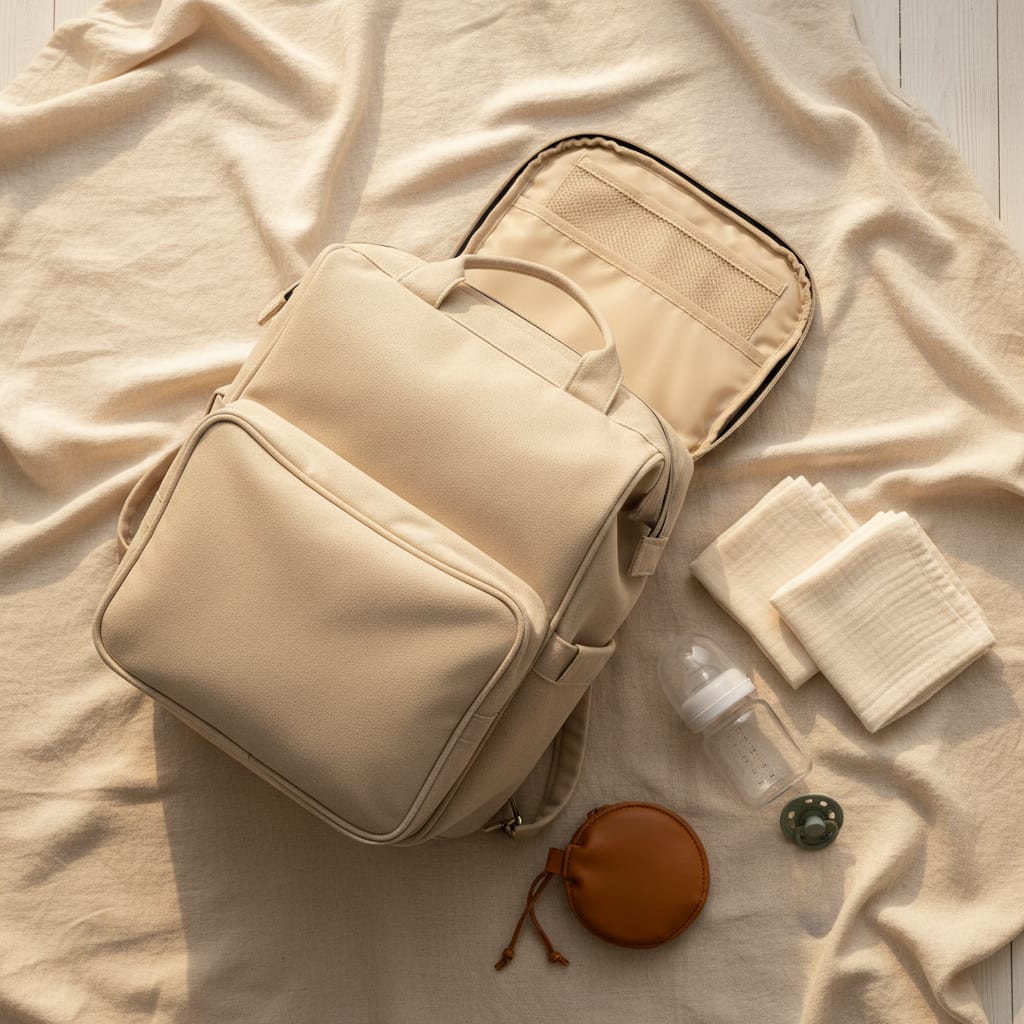
Bottom line up front: the best diaper bag backpack for most parents is a mid-range structured backpack in the roughly $70–$120 lane — wide clamshell opening, genuinely padded straps, insulated bottle pockets, stroller clips and a wipeable lining. Cheaper bags tend to fail exactly where the load concentrates (zipper seams and strap anchors), and the premium tier mostly charges for not looking like a diaper bag. Spread over the two-to-three years you’ll actually carry one, the mid tier works out to a few dollars a month.
I’ve carried three diaper bags across two kids — one cheap tote that lasted four months, one budget backpack whose zipper gave out at the worst possible airport moment, and the structured mid-range backpack that survived everything after. This guide is built on what that load actually did to each of them. Affiliate links never change my verdicts.
The load test: what a real day weighs
Diaper bags are sold photographed empty. Here is what a normal outing with one baby actually put in mine: five or six diapers, a full wipes pack, a portable changing mat, two spare outfits, a filled bottle or snack cup, a burp cloth, two toys, plus the parent layer — phone, keys, wallet, water bottle. With two kids, add a second size of diapers and more snacks.
That load usually lands somewhere around 8–12 pounds. Every spec below matters because of that number: you are choosing a bag you’ll wear, loaded, for hours, hundreds of times.
The specs that actually matter
- Opening style. A wide clamshell or doctor’s-bag opening that lets you see the whole interior beats a narrow top zip every time. You will be finding things one-handed, in the dark, with a baby on your hip.
- Strap and back padding. At 10 pounds, unpadded straps stop being a detail. This is the biggest single difference between the budget and mid tiers, and you only discover it an hour into wearing the cheap one.
- Zipper quality. In my experience — and in the review histories I read obsessively before buying my third bag — zippers are where budget bags die. A bag is only as durable as its most-used zipper.
- Insulated bottle pockets. Ideally reachable without opening the main compartment.
- A separated wet pocket for the swim things, the blowout outfit, the used bibs.
- Stroller clips. Hanging the bag on the handlebar is how it gets carried half the time; if you’re also choosing wheels, my travel stroller guide covers what those handlebars can take.
- Wipeable lining. Something will open, leak or crumble inside the bag. Light-colored, wipeable fabric turns a disaster into a paper-towel job.
The comparison table
| Tier | Typical price | What you get | Where it fails | Best for |
|---|---|---|---|---|
| Budget backpack | ~$30–$50 | The pockets and shape, thin materials | Zippers, strap padding, sagging when full | Light packers, backup bag, short haul |
| Mid-range structured | ~$70–$120 | Clamshell opening, real padding, insulation, clips | Rarely — this tier is the sweet spot | Most families — the default buy |
| Premium / fashion | ~$150–$250+ | Leather-look materials, doesn’t read as a diaper bag | Price buys style, not function | Parents who’ll carry it as their only bag |
| Regular hiking daypack | ~$40–$100 | Bombproof build, great straps | No changing mat, insulation or organization | Minimalists willing to add pouches |
Picks by parent type
The default buy: a mid-range structured backpack (~$70–$120). This tier is where the wide opening, the padding, the insulated pockets and the trustworthy zippers all show up at once. The mainstream mid-range models are more alike than their marketing suggests, so choose within the tier on the opening style you prefer and whether it stands up on its own — a bag that faceplants on the changing-room floor gets old fast.
The minimalist: a small daypack plus pouches (~$40–$100). If your packing list looks like my minimalist registry, a well-made ordinary daypack with two zip pouches (one dry, one wet) does the job with better straps than most diaper bags. You give up insulation and the built-in mat; you gain a bag with a life after diapers.
The two-kid hauler: the biggest mid-range option (~$90–$140). Two kids don’t need a different kind of bag, just more liters of it. Prioritize capacity and a structured base that won’t collapse into a laundry pile.
The fashion tier, honestly (~$150–$250+). The premium bags are genuinely nicer objects, and if it replaces your handbag entirely, the math can work. But function-per-dollar peaks in the mid tier — above it you’re buying how the bag looks in photos, which is a fine thing to buy as long as you know that’s the purchase.
The cost math
A $90 mid-range backpack carried daily from birth to roughly age two and a half comes out to about $3 a month — less if a second kid inherits it, which a good one will survive. My $35 budget backpack lasted about eight months before the zipper failure, which is roughly $4.40 a month for a worse bag. This is the pattern I keep finding in baby gear: the cheap tier is often the more expensive one per month of actual service.
One packing note: the bag’s first outing is usually the hospital, and that load is different — my hospital bag checklist covers what changes.
FAQ
Do I need a diaper-specific backpack, or will a normal one work?
A normal backpack absolutely works if you add a folding changing mat and a couple of zip pouches for organization. What you’re paying the diaper-bag category for is built-in insulation, the wide opening, stroller clips and a wipeable interior. If those four features don’t excite you, save the money.
How big should a diaper bag backpack be?
For one baby, a medium bag — roughly the size of a school backpack — carries a full day with room to spare. Bigger bags mostly invite overpacking; my heaviest era was the giant-bag era, and the bag was the reason. Two kids justify the largest sizes; one kid rarely does.
Are the luxury diaper bags worth it?
As bags, they’re well made. As diaper bags, they don’t outperform the mid tier at the things that matter — opening, padding, insulation, zippers. They’re worth it if the bag doubles as your everyday bag and you’d otherwise be buying a nice backpack anyway. They’re not a functional upgrade.
How long do you actually use a diaper bag?
The heavy-carry phase runs from birth until roughly age two to three, tapering as diapers and bottles drop out of the load. A durable bag will outlast the need — which is a real argument for picking one you’d happily keep using as a plain backpack afterward.