Bottom line up front: no pillow before your child’s first birthday under any circumstances, and the widely repeated pediatric line is to wait until around age two. Soft objects — pillows, blankets, bumpers, stuffed animals — stay out of the sleep space for the whole first year, and pillows in particular are the item pediatric guidance keeps flagging past that. After age two, the trigger is not the birthday, it is the move out of the crib into a bed with a proper mattress. And when you do buy, the specification that matters is small, flat and firm, which is the opposite of what the pillow aisle wants to sell you.
I have bought toddler pillows twice, with my own money, and got the first one wrong. Affiliate links never change my verdicts.
The safety line, stated plainly
For the first twelve months, the sleep surface is firm, flat and empty: a fitted sheet on a firm mattress, baby on their back, nothing else in the space. That includes pillows, and it includes the small “flat” ones marketed as safe for infants.
Past twelve months the risk profile changes, but it does not vanish, and the standard advice you will hear from pediatricians is to hold off on a pillow until roughly age two. The concern is straightforward mechanics rather than anything exotic: a soft surface near a small face in an enclosed sleep space is a suffocation risk, and toddlers move a great deal in their sleep.
Nothing about that changes if a child looks comfortable, or if a relative points out that their children slept on pillows. Warmth is a separate problem with a separate solution — a wearable blanket, sized correctly, does the job a blanket or a pillow is often being recruited for, which is the whole argument in my sleep sack testing. Betteroo’s rundown on when loose bedding becomes appropriate covers the blanket half of the same timeline.
The readiness signs that matter more than the date
Once you are past the age-two line, three things tell you it is time, and none of them is a number.
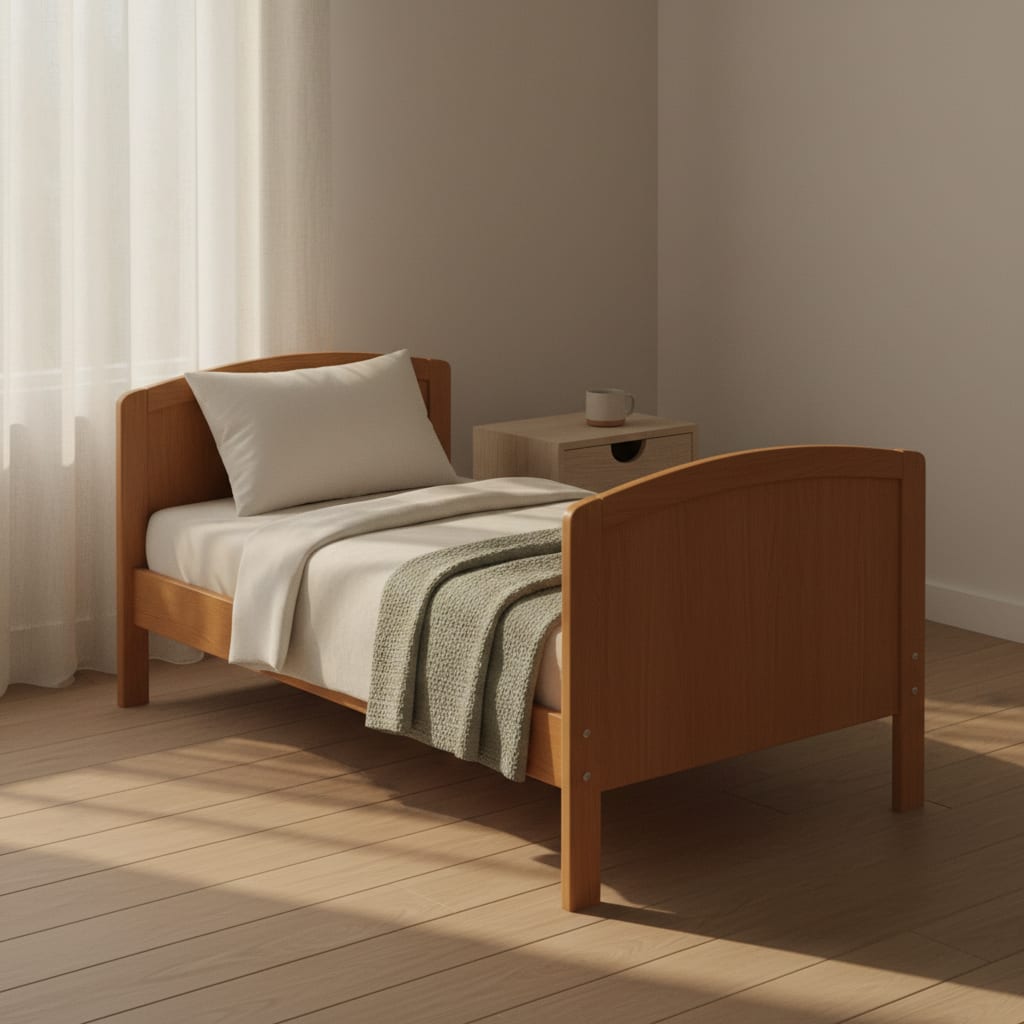
They have moved to a bed. A pillow belongs with a toddler bed or a floor bed, not in a crib. A crib is a small enclosed box, and the pillow has nowhere to go but against the rails.
They are improvising one. A toddler who is bunching a blanket, sleeping face-down on a stuffed animal or wedging their head against the bumper-free rail is telling you their head wants some elevation.
They can move it themselves. The practical safety test: if a pillow ends up over their face, can they push it off without waking anybody? If the answer is not an obvious yes, wait.
And one anti-sign: do not add a pillow in the same week as another change. A new bed, a new sibling, potty training and a nursery start are all disruptions of their own, and stacking them means you will never know which one caused the 4 a.m. wake-ups. If the timing question is really about the bed itself, Betteroo’s guide to moving out of the crib is the sequence I would follow.
The spec sheet for a toddler pillow
This is a short list and every item on it runs against the marketing.
Size: roughly 13 by 18 inches. That is the standard toddler dimension and it is not arbitrary — it fits a toddler bed, it does not extend past the shoulders, and it cannot be pulled over a whole body. An adult standard pillow on a toddler bed is the actual hazard people worry about when they worry about pillows.
Loft: low. A toddler’s head-to-shoulder distance is tiny. A tall, plush pillow tips the head forward rather than supporting it, which is the exact opposite of the purpose. Flat looks unappealing in a photograph and is correct in a bed.
Firmness: supportive, not squashy. You want it to resist a pressed hand rather than swallow it.
Shell: washable, tightly woven cotton. Toddler pillows meet nosebleeds, night sweats and stomach bugs. If the whole pillow is not washable, the case had better be.
Certifications worth reading: OEKO-TEX Standard 100 on the fabric tells you the textile has been tested against a long list of harmful substances. That is a real, checkable claim, unlike “natural” or “hypoallergenic”, which mean very little on their own.
Two pillows that meet the spec
The mainstream pick: the Little Sleepy Head Toddler Pillow. Thirteen by eighteen inches, polyester cluster-fibre fill in a cotton shell, OEKO-TEX Standard 100 certified, sold with an envelope pillowcase. It washes, it costs about what a takeaway dinner costs, and it is the one I would buy first for a bed that is also going to see daycare naps and travel. Cluster fibre packs down over time — plan on replacing it rather than expecting a decade out of it.
The premium pick: the Lincove Canadian Down Toddler Pillow, also sold direct as the down and feather toddler pillow from around $85. Same 13 by 18 inch footprint, 800 fill power Canadian down and feather in a 400-thread-count cotton shell. Down’s advantage here is the one I found testing the adult line in my Lincove review: it relofts every morning instead of taking a permanent set, so it does not become a pancake in a year. The honest catches are the price, the fact that down needs airing and a protector rather than a weekly machine wash, and that a feather-sensitive child rules it out entirely — Lincove’s down-alternative line exists for that.
Whichever you buy, put a case on it, wash the case weekly, and treat the pillow as a consumable. And if the pillow is arriving alongside a whole second-hand bed setup, check the frame and the mattress before the bedding — the questions I run through are in my secondhand sleep gear guide.
FAQ
Can a one-year-old sleep with a pillow?
No. Soft objects stay out of the sleep space for the first twelve months, and the standard pediatric advice extends the wait on pillows specifically to around age two. A wearable blanket handles the warmth reason people usually reach for one.
What size pillow does a toddler need?
Roughly 13 by 18 inches, which is the standard toddler size. It should not extend past the shoulders and should sit low. A full-size adult pillow in a toddler bed is the configuration to avoid.
Do toddlers actually need a pillow at all?
Not really — plenty sleep flat until school age with no ill effects. A pillow is a comfort item that most children start wanting somewhere between two and three, usually around the move to a bed. There is no developmental milestone that requires one.
How do I know if the pillow is too high?
Look at the neck from the side while they are asleep. If the chin is being pushed toward the chest, the loft is too tall. A correctly sized toddler pillow looks almost disappointingly flat when you unbox it.
When should you replace a toddler pillow?
When it fails the fold test — fold it in half, and if it stays folded rather than springing back, the fill is done. For synthetic fills that is often within a year or two of nightly use, and sooner if it has been through several washes.