Bottom line up front: the best sleep sack is whichever well-made sack matches its TOG rating to your nursery’s actual temperature — for most homes that means a roughly 1.0 TOG cotton sack, around $25–$35, with an inverted zipper for night changes — and you need two or three of them, not a drawerful. A sleep sack’s whole job is to be the blanket your baby can’t kick off or pull over their face, since safe-sleep guidance keeps loose bedding out of the crib for at least the first year. Everything past TOG-matching, a safe cut and a sane zipper is fabric preference and pattern shopping.
I’ve run sleep sacks through two kids, a cold-winter nursery and a shrinkage experiment my wallet regrets. Affiliate links never change my verdicts.
TOG, decoded in one table
TOG (thermal overall grade) measures warmth — higher number, warmer sack. It’s the one genuinely useful spec in this category because it converts “is my baby too hot?” anxiety into a lookup. The table most brands converge on, give or take a degree:
| Nursery temp | TOG | What baby wears under it |
|---|---|---|
| 75°F+ (24°C+) | 0.2–0.5 | Diaper or short-sleeve onesie |
| 71–74°F (22–23°C) | 0.5–1.0 | Short- or long-sleeve onesie |
| 68–72°F (20–22°C) | 1.0 | Long-sleeve onesie or light pajamas |
| 61–68°F (16–20°C) | 2.5 | Footed pajamas |
| Below 61°F (16°C) | 3.5, or warm the room | Footed pajamas, layer per brand chart |
Two field notes. First, buy a cheap room thermometer before buying sacks — every parent I know guessed their nursery temperature wrong, including me, and the thermometer costs less than one mis-TOGed sack. Second, the hand-on-the-chest check beats the chart when they disagree: chest or back of neck warm-not-sweaty is the target, and overheating is the direction safe-sleep guidance says to avoid. Cold hands are normal and not a reading.
What actually differentiates sacks
The zipper is the real spec sheet. An inverted zipper (opens from the bottom) lets you do a 3 a.m. diaper change without undressing the whole baby or lighting up the wake-up circuitry you’ve carefully managed all evening — the same night-defense logic as the placement rules in my white noise machine testing. Two-way zippers with a garage at the chin are the mark of a brand that has actually met a baby.
Fit is a safety item, not a style one. Armholes snug enough that the sack can’t slide up over the face, neckline that doesn’t gape, and the right size for weight — oversized “room to grow” purchases work against the entire point. Sizing up in TOG-appropriate fabric beats sizing up in dimensions.
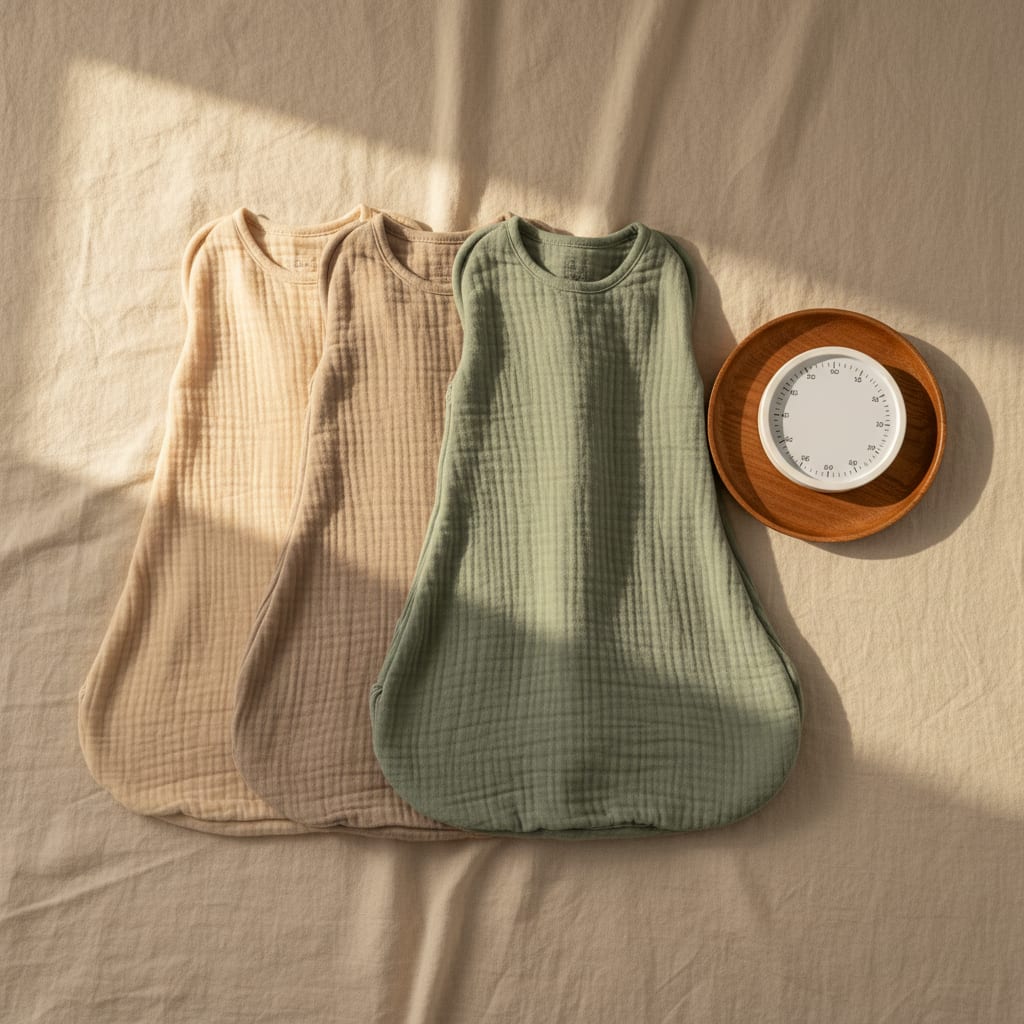
Fabric tiers, honestly. Basic woven or jersey cotton (roughly $20–$35 — the Halo/Carter’s class) does the job and survives industrial-scale laundering. Premium cotton and modal (roughly $30–$45 — the Woolino-adjacent, boutique-cotton class) feels lovely and washes well. Bamboo-derived rayon (roughly $35–$50 — the Kyte class) is genuinely the softest thing in the drawer and the most maintenance-sensitive: my wash tests match the internet’s collective experience that hot dryers and bamboo rayon end badly. Line-dry or low-heat, always. Merino (roughly $60–$100) self-regulates across a wide temperature band impressively — it’s the one luxury tier with a functional argument, and still a luxury.
Weighted sacks: no. Weighted sleep products for infants are a flat safe-sleep no per current AAP guidance, whatever the marketing says about calm. Not a maybe.
The cost math
The honest count is two to three sacks per size and TOG season: one on the baby, one in the wash, optionally one for the blowout hat-trick nights. At the basic-cotton tier that’s around $60–$90 per size stage; sizes turn over roughly every six months in the first year, then slow down. The premium-bamboo version of the same drawer runs $110–$150 per stage — the delta buys softness and prints, which is a fine thing to want and a wrong thing to call a sleep upgrade. Sacks also hand down between kids nearly perfectly (zippers die before fabric does), which halved my real cost the second time around.
Where sacks slot into the bigger sleep picture: they’re the wardrobe layer of the routine architecture in my newborn sleep schedule — a consistent sack-on moment is one of the cheapest sleep cues you can install — and they pair with the timing framework in wake windows by age rather than replacing it. No fabric fixes an overtired baby.
FAQ
When can my baby start using a sleep sack, and until when?
From day one — sacks are the standard follow-on from swaddling, and the transition out of a swaddle to an arms-free sack should happen as soon as your baby shows signs of rolling. On the far end, many kids wear sacks happily to age two or beyond; toddler sizes with leg holes exist for the crib-standing crowd. There’s no developmental deadline to quit; most families stop when the kid can zip themselves out.
Do I really need different TOG ratings for summer and winter?
If your nursery swings more than a few degrees seasonally, yes — that’s the whole point of the number. A 1.0 TOG covers the wide middle of climate-controlled homes year-round with clothing adjustments underneath; add a 2.5 for cold winters or a 0.5 for hot summers only if your thermometer says so. Buy the thermometer first, then let it decide.
Are sleep sacks actually safer than blankets?
For babies under one year, safe-sleep guidance is unambiguous that loose bedding stays out of the crib, and a wearable blanket is the recommended way to keep a baby warm — that’s the sack’s entire mandate. A sack isn’t a magic safety device beyond that: the bare-crib, back-sleeping rules still carry the load, and any questions specific to your baby belong with your pediatrician.
Is bamboo worth the extra money?
As softness, genuinely yes — it’s the nicest hand-feel in the category and helpful for sweaty sleepers. As a claimed sleep improvement, no evidence I’d spend on. Factor in the care-label tax: bamboo rayon demands cool washes and low or no dryer heat, and a shrunk $45 sack is an expensive way to learn what my wash test already confirmed.