If your child has just started wearing a hearing aid, what catches families out is not the fitting. It is the moment the aid comes out. For the rest of the night your child is in a room quieter than any they have known since the aid arrived, and the reassurance you have used all day — your voice, from the doorway — stops arriving. You have lost your main channel at the hour you need it most, and the fix is to build a second one now, not at 2 a.m.
The device belongs to your audiologist: wear schedule, fit, earmold, settings. I am not guessing at that from a review site. What follows is the half you control — the room, the routine, and where the aid lives at night.
The night is a different problem from the day
NIDCD describes what the aid does all day: “It makes some sounds louder so that a person with hearing loss can listen, communicate, and participate more fully in daily activities.” AAP’s HealthyChildren puts the corollary bluntly — “a hearing aid will work only when it’s being worn.” So overnight is the one long stretch where what you spent weeks establishing is switched off. Three consequences, none of them behaviour problems:
- They cannot hear you approach, only arrive. A parent audible from two rooms away now materialises at the bedside — a jump scare, not a comfort.
- The house goes missing. A sibling, the hallway, the boiler — the ambient evidence the place is still occupied is gone. A dark room is very different from a silent one.
- Reassurance by voice does not land. “You’re okay, go back to sleep” from the door is, from inside the room, a person standing silently — and it may work less well than before, because your child has had weeks of it working better.
That is a signal problem, not a sleep problem — the inverse of why a baby wakes when white noise stops, where the noise floor drops. Here the floor holds and the receiver goes.
What replaces your voice once the aid is out
Pick at least two of these three before bedtime one, and use the same ones nightly.
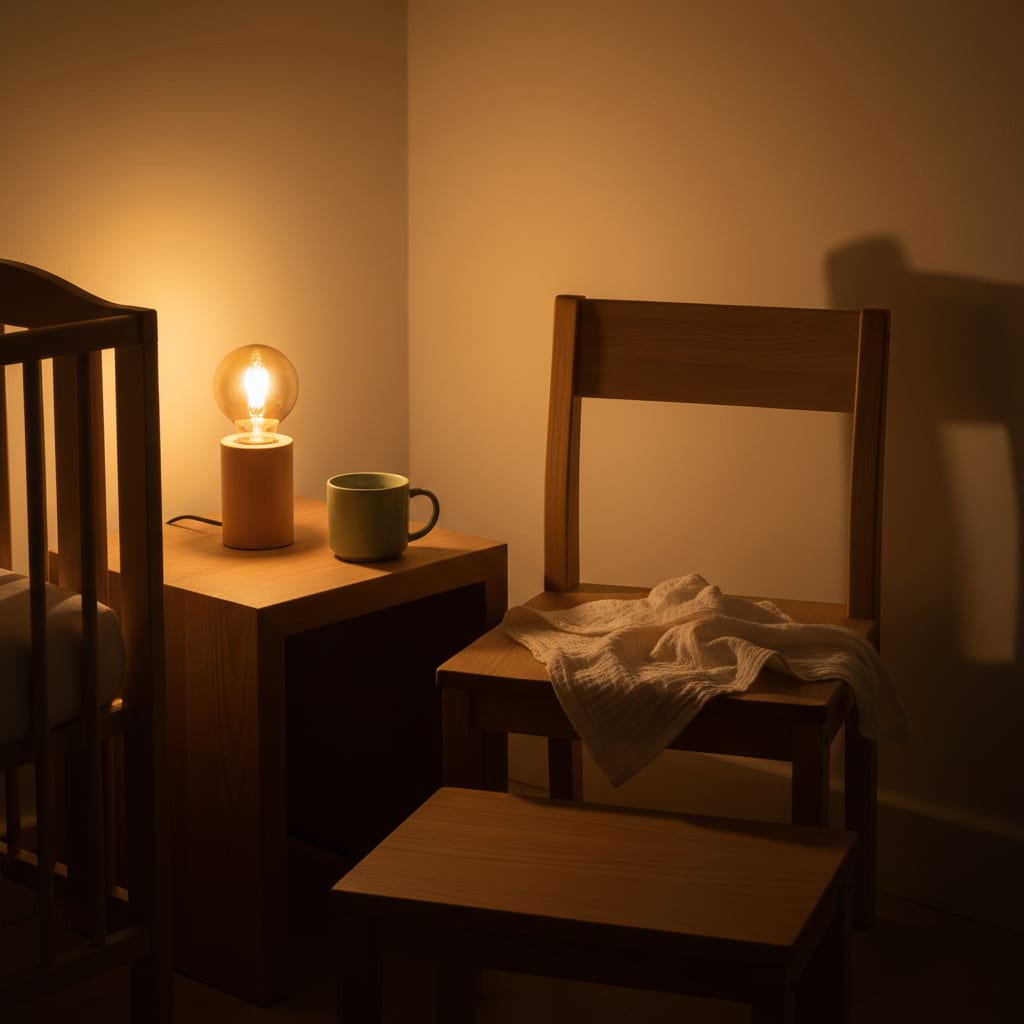
Light your child can read without sitting up. Something low and warm, already on when they wake, so opening their eyes answers the question rather than starting it. Colour carries meaning without sound or numerals: green means get up, amber means it is still night. The Hatch Baby (formerly Rest) is what most families end up with — see our review. Predictability is what makes it a message.
Touch, on a fixed protocol. Decide where it lands — a flat palm on the upper back or the shin, held still a few seconds, every time. The consistency is the content: one pressure comes to mean I am here and nothing is happening. Do not vary it; a different touch reads as different news.
Enter where you can be seen. Leave the door open to a fixed angle with a dim light behind you, so you arrive as a visible shape rather than an unannounced hand. If it has always been shut, change that first — it costs nothing and removes most of the startle.
Do not put the aid back in at 2 a.m. so you can talk — that is a full wake-up. Give the same answer nightly instead, by light and touch and mouthed clearly: it is still night, and it comes back when the light turns green. If the waking looks less like a hearing problem and more like a child who needs you at the door, Betteroo’s guide to why a child needs company to fall asleep covers that overlap.
Where the aid goes overnight, and why the batteries do not go there
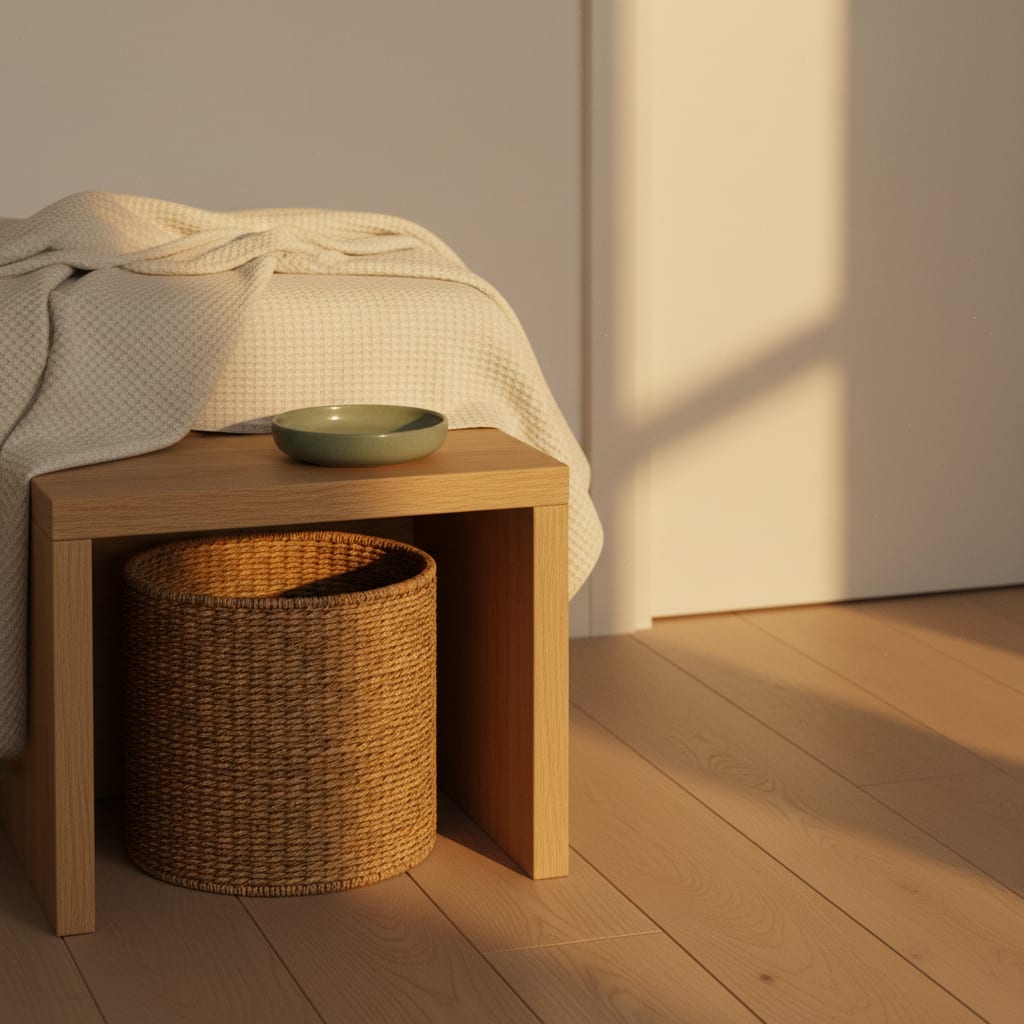
Two rules pull in opposite directions here, which is why it gets done wrong. The aid needs one named address you can find in the dark, at adult arm’s length. A shallow dish beats a case: a lid needs two hands and daylight. Say the spot out loud at bedtime and never move it.
The batteries do not live at that address. Poison Control is specific about hearing aids: “Make sure all hearing aids for children have child-resistant battery compartments and make sure the lock is activated when the child is wearing the aid.” On spares — “Never leave batteries sitting out. Store spare batteries, and batteries to be recycled, out of sight and reach of young children.” NIDCD: “Keep replacement batteries and small aids away from children and pets.”
So: a bedside dish for the aid, spares in a latched box in another room. If a battery goes missing or is swallowed, Poison Control says to “Call the National Battery Ingestion Hotline at 1-800-498-8666 or call a poison center at 1-800-222-1222 immediately,” and that “Prompt action is critical.” Keep those numbers handy.
Drying is the one purchase that pays for itself
Every source I loaded agrees — NIDCD: “Keep hearing aids away from heat and moisture”; Stanford Medicine Children’s Health: “Hearing aids need to be kept dry.” A child’s aid spends the day against a warm ear on a head that runs hot and sweats in sleep, and overnight is the only drying window long enough to matter.
- Wisesorb drying jar — sealed container plus desiccant capsules, no power, nothing to fail. The right first buy if you are unsure the habit will stick. Keep the capsules out of reach; they are a swallowing hazard.
- DryDome by Dry & Store — compact convection dryer running off micro-USB, no desiccant and no chemicals, so nothing to replace and nothing loose inside. Best for a small room or a suitcase.
Put whichever you choose on a high shelf, not beside the bed. The aid goes in as the last step of bedtime and out as the first of morning. Note too that with the aid out a sound machine may be doing nothing for this child, so do not count white noise as part of the setup until you ask.
Re-fitting belongs to the wake-up, not to breakfast
KidsHealth is realistic about the curve: “It can take time for your child to get used to wearing a hearing aid. Start slow, and gradually increase the amount of time it’s worn until your child wears the hearing aid most of the day.” The night is the biggest block of not-wearing, so the morning re-fit is the hinge — drift to “after breakfast” and you have quietly shortened the wear day by an hour.
Attach it to something that already happens: aid in before feet touch the floor, or before the door opens. Pick one and use it daily, so the habit hangs off an existing habit rather than anyone’s intention. Expect it forgotten once in the first fortnight — the ordinary rate.
For an older child waking alone, the missing piece is an alarm they can perceive. A Sonic Bomb clock with a bed shaker puts a vibrating puck under the mattress and wakes by movement and flashing light rather than sound. Younger children need only the bedside light. If you are rebuilding the sequence rather than tweaking it, Betteroo’s walkthrough of a predictable evening sequence is a sane frame. The point is the one we made about sleeping in a prescribed night brace: the clinic owns the device, you own the room.
FAQ: hearing aids, bedtime and the first nights
Should my child sleep wearing the hearing aid? Ask your audiologist and follow what they say — that is a clinical call about your child’s device and ears, and none of the sources cited here prescribe a wear schedule. Either way, their care guidance is about drying, heat and battery storage.
How long does the extra night waking last? Families generally describe a rough week or two that settles as the pattern stops being new. If waking escalates rather than eases, or your child seems to be in pain around the ear, call the audiologist.
My child keeps pulling the aid out at bedtime. Is that refusal? Usually the routine has no clear end point yet. Give removal a fixed moment and destination, so it happens to the aid at a set time rather than being an escape. Persistent discomfort goes back to the audiologist — an earmold on a growing ear is a fit question, not a behaviour one.
Betteroo’s free two-minute walkthrough is a reasonable second read on where the nights are breaking.