Bottom line up front: a six month old needs five to eight simple toys — things to grasp, mouth, bang, shake and drop — and the entire kit costs around $50–$80, or less, because some of the best entries are already in your kitchen. At this age the developmental jobs are reaching and transferring between hands, mouthing everything, sitting with support, and discovering cause and effect. Toys that let the baby make something happen got used daily in our house. Toys that performed at the baby — lights, songs, demo-mode chaos — got thirty seconds of stare and a spot in the graveyard bin.
This post is the honesty audit: what my two kids actually used at this stage, what they ignored, and what the ignore-pile cost me. Affiliate links never change my verdicts.
What a 6-month-old is actually working on
Around the half-year mark, most babies are raking and grasping with the whole hand, passing objects hand to hand, sitting with support or briefly solo, and running everything through the mouth — mouthing is the primary research instrument, not a bad habit. Cause-and-effect wiring is going in fast: shake it, it rattles; drop it, mom picks it up (a game with infinite replay value, for one of you). Ranges are wide and normal; if you have questions about your baby’s milestones, that’s a pediatrician check-in, not a toy purchase. The practical spec sheet for a toy at this stage: light enough to wave one-handed, textured enough to be interesting to gums, no small parts, and responsive — it should do something because the baby did something.
The used-daily list
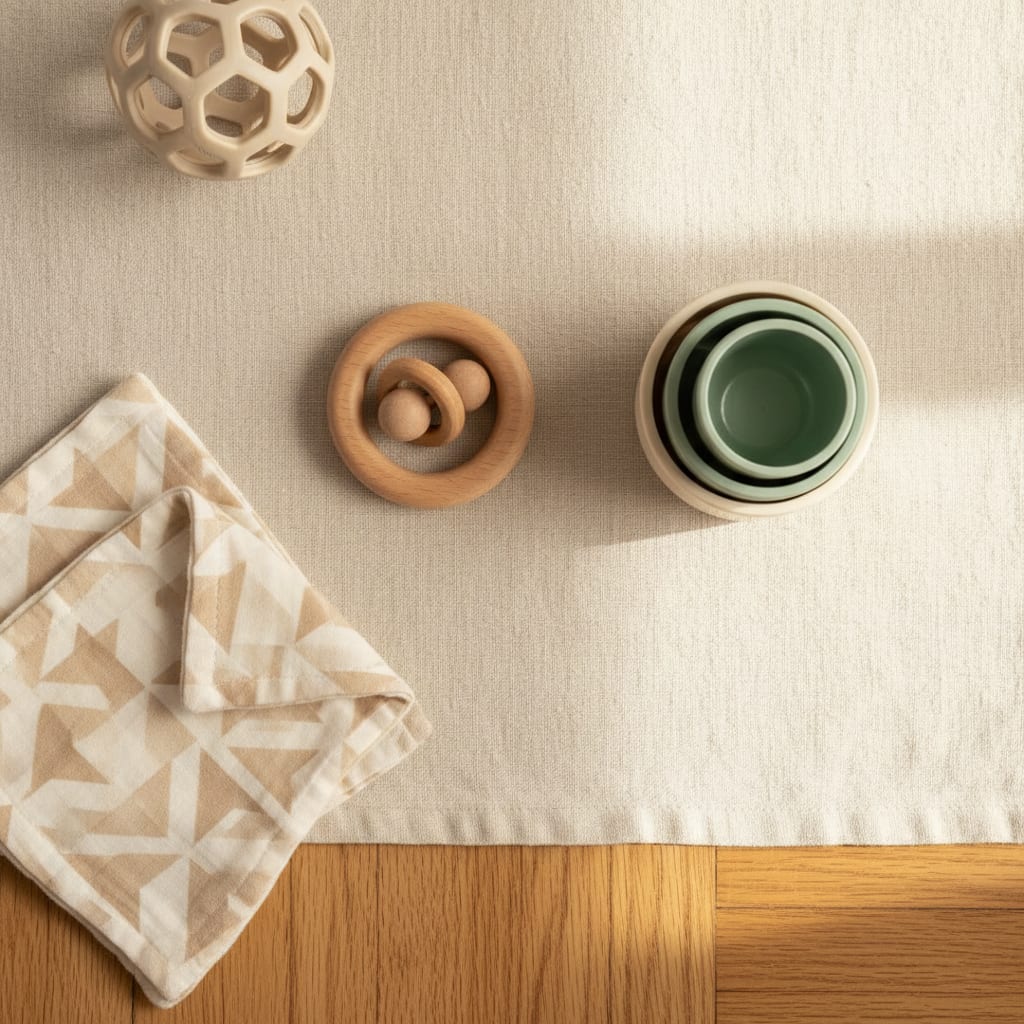
A good rattle-teether hybrid (around $8–$15). Silicone or wooden ring-style teether-rattles were the single most-used object of the stage for both my kids. Grabbable, mouthable, cause-and-effect in one — the whole spec sheet in one object.
A crinkle book or soft book (around $8–$12). Crinkle paper is baby catnip, and soft books survive the mouthing that board books at this age do not.
Stacking cups (around $6–$10). The sleeper MVP. At six months they’re for banging, mouthing and knocking over your towers; the same cups are still in service at two for actual stacking and bath duty. Best cost-per-month-of-use number in the toy box.
A baby-safe mirror (around $10–$15). Tummy-time endurance roughly doubled at our house with a floor mirror propped up. The baby in the mirror is a fascinating stranger for months.
An activity gym you already own — maybe. If you have a play gym from the newborn months, its arch-and-dangle phase is winding down but the mat keeps earning as a sitting-practice zone. I would not buy one fresh at six months; the window left is too short for the roughly $50–$140 price class.
Balls with grip texture (around $8–$12). Oball-style latticed balls are graspable by tiny raking hands months before smooth balls are, and they roll just enough to motivate the pre-crawling scoot.
The free tier. Measuring cups, a wooden spoon, a metal mixing bowl (the acoustics alone), silicone spatulas, an empty water bottle with dry pasta sealed inside for one supervised session. My honest observation across two kids: the kitchen tier competed head-to-head with everything purchased above and frequently won.
The abandoned-toy graveyard
Where my money went to die, so yours doesn’t have to:
Electronic activity centers and light-up consoles. The classic performing-at-the-baby purchase. High sensory output, near-zero baby agency, and the demo mode alone will shave months off your life. Both kids were done in under a minute per session.
Age-inappropriate “growth” toys. Anything marketed 6-months-plus because a six-month-old can technically touch it — shape sorters, early puzzles — sat unused for half a year. Buying ahead of stage isn’t an investment; it’s storage.
The plush army. Babies this age mostly can’t do anything with stuffed animals, and soft toys stay out of the sleep space per safe-sleep guidance anyway. Gifts will supply your plush needs several times over.
Subscription toy boxes at this specific age. The curated-kit pitch (Lovevery-class, typically around $40 a month equivalent) is real curation and lovely objects — but at six months the contents overlap heavily with the $60 list above. I think the subscriptions get more interesting in toddlerhood; at this stage they’re paying a premium for someone else to choose the stacking cups.
The cost math and the rotation trick
The full used-daily kit above lands around $50–$80 bought new, less secondhand — toys at this age wash well, and mouthing-grade sanitizing is a dishwasher cycle for silicone and plastic pieces. Spread over the roughly four-month window before the stage shifts, that’s under $20 a month for the entire play program, which is why I file toys with the skip-it registry lines in my minimalist registry checklist rather than the spend-here lines.
One behavioral cheat worth more than any purchase: rotation. Keep half the toys in a closet, swap weekly, and watch week-old toys become new again. Novelty is the feature babies are buying; rotation manufactures it for free. And time your play windows sensibly — a six-month-old’s best engagement sits early in the wake window, a rhythm I map out in wake windows by age; past it you’re marketing toys to an audience that needs a nap, per the schedule realities in the 4-month sleep schedule post.
FAQ
How many toys does a 6-month-old actually need?
Five to eight in active rotation covers every developmental job of the stage. More toys don’t produce more development — there’s reasonable evidence and near-universal parental observation that fewer toys out at once means deeper play. The constraint that matters is variety of properties (textures, sounds, weights), not quantity.
Are electronic toys bad for babies?
“Bad” overstates the evidence; “worse per dollar” is the fair claim. Pediatric guidance consistently favors simple toys and caregiver interaction over electronic ones at this age, and my own testing panel of two treated every light-up console as furniture within a week. Nothing you need to feel guilty about at grandma’s house — just not where I’d put money.
What should I look for in teething toys?
Solid silicone or hardwood, one piece, no liquid filling (freezer teethers with liquid can leak once gnawed), sized so no part fits fully in the mouth, and dishwasher-tolerant. Texture variety matters more than quantity — different gum-feel is the actual feature being consumed.
Do subscription play kits make sense at this age?
They’re well-designed and the age-matching is genuinely convenient; the honest math is that the six-month-stage contents duplicate a $60 self-assembled kit at roughly double to triple the cost. If decision fatigue is your scarcest resource, that’s a legitimate purchase. If money is, build the list above and revisit subscriptions in toddlerhood.