Bottom line up front: the best baby gate depends on where it goes, and the top of the stairs has its own rule: it needs a hardware-mounted gate that screws into the wall or banister and has no bar across the floor. The KidCo Safeway is the straightforward pick for a top step between two walls. Its angle-mount version handles a banister or uneven walls. For doorways and the bottom of the stairs, a pressure-mounted gate like the Regalo Easy Step is cheaper, needs no drilling, and is fine. For an open-plan space too wide for any standard gate, a configurable panel gate such as the Regalo 192-inch Super Wide is the usual answer.
The structure of this page is location first, then mounting, then product. That order follows how gates fail: almost never because of the brand, nearly always because the wrong mounting type went in the wrong place.
Hardware vs pressure: the one decision that matters
Every baby gate holds itself up in one of two ways.
- Pressure-mounted gates press outward against the two sides of the opening and stay up by friction. No screws, no holes, easy to move. Most have a bar across the floor that you step over.
- Hardware-mounted gates screw into the wall studs, door frame or banister. They hold however hard a child pushes, and the better ones swing open with no floor bar at all.
The rule for stairs comes straight from that difference. IKEA’s recall of two of its own pressure-mounted gates spells out the failure in a manufacturer’s words. It warned that the gates were “not to be used at the top of a staircase,” because “the friction between the wall and the pressure mounted safety gate has been insufficient to hold the gate in its intended position,” and that “the lower metal bar could constitute a tripping hazard.” It recorded “3 reports identified where children have been injured as a result of falling downwards on stairs” (IKEA recall notice, loaded 11 October 2026). The same notice says those pressure gates “are safe to use in a doorway between rooms or at the bottom of a staircase.”
That is the whole buying logic. Friction fails exactly where a fall is longest, and a floor bar is a trip hazard exactly where an adult is carrying a baby down a flight of stairs. It is the same lesson as a blackout blind a baby can pull down: anything held up by friction gives way when a determined small person pulls on it.
The mounting table
| Location | Mounting | Floor bar OK? | Pick |
|---|---|---|---|
| Top of stairs, wall to wall | Hardware | No | KidCo Safeway |
| Top of stairs, banister on one side | Hardware, angle mount | No | KidCo Angle Mount Safeway, or Cardinal Gates Stairway Special |
| Bottom of stairs | Pressure or hardware | Yes | Regalo Easy Step |
| Doorway between rooms | Pressure | Yes | Regalo Easy Step |
| Extra-wide or open plan | Panels, configurable | Varies | Regalo 192-inch Super Wide |
Top of the stairs: hardware, no floor bar
The pick: KidCo Safeway. It fits openings of about 24.75 to 42.5 inches, mounts with hardware, and has no bottom bar. KidCo’s listing describes quick-release mounting hardware, so the gate can come off its wall brackets when you need the stairs clear. It swings open as a walk-through gate, which is the feature you will use most when carrying laundry or a baby.
Two installation points, both from Betteroo’s stair-proofing walkthrough: mount the gate “at the very top of the stairs so there is no step on the baby’s side of the gate,” and screw into “the wall studs, banister or door frame,” not into plasterboard alone. A gate is only as strong as what its screws are in.
Skip it if you rent and cannot drill. Then the answer is a banister kit (below) or talking to your landlord, not a pressure gate at the top.
If one side is a banister
Most staircases do not end neatly between two walls. One side is a banister post or a spindle rail, and a standard gate either cannot mount to it or sits at an angle.
- The KidCo Angle Mount Safeway fits about 28 to 42.5 inches. KidCo says it “allows one side to be mounted on the wall and the other on a banister” for top-of-stairs installs where the mounting points do not line up.
- The Cardinal Gates Stairway Special fits openings of 27 to 42.5 inches. Cardinal’s own page (checked 11 October 2026, $99.95) says it “can be mounted at angles up to 30°” and includes “an optional one-way stop bracket to limit opening over stairs.” The banister clamps in its photos are sold separately.
- A banister mounting kit such as the Cardinal Gates GIK clamps to a round or square post and gives the gate’s hardware something solid to screw into. That saves drilling into the banister itself, which matters in a rental or with a newel post you care about.
Measure the opening at the height the gate mounts, on the actual post and wall, before ordering. Banister installs are where a “fits 27 to 42.5 inches” range most often turns out to mean something different in your hall.
Bottom of the stairs and doorways: pressure is fine
The pick: Regalo Easy Step. It fits about 29 to 38.5 inches and is sold explicitly for the bottom of stairs and doorways. Whatever you buy for a spot you pass all day, make it a gate you can walk through with one hand. A gate you must unclamp every time ends up left open.
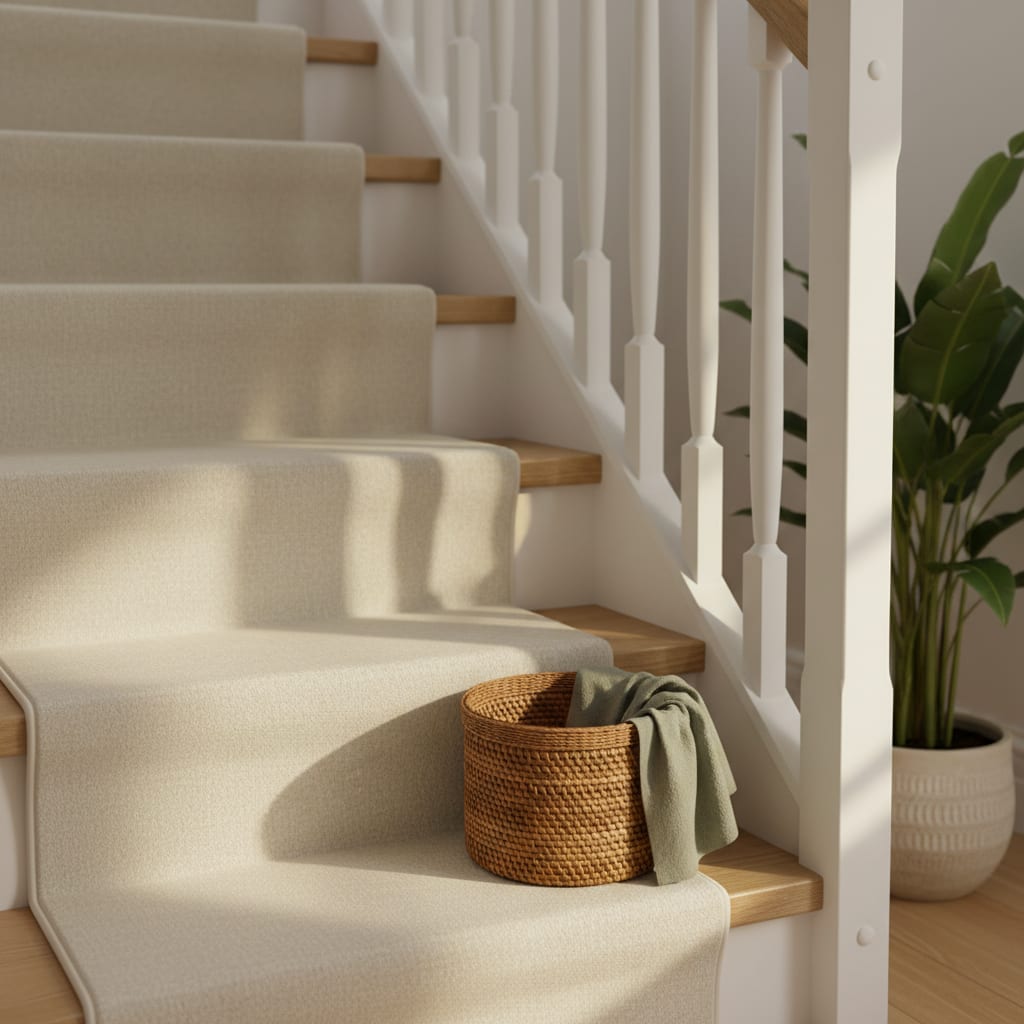
At the bottom of a staircase there is one placement detail worth getting right. Betteroo’s guide advises installing it “on the first or second step, not the floor in front of the stairs, so your baby cannot climb the first few steps and fall from above the gate.” A gate set on the floor in front of the bottom step leaves the first two or three steps inside the baby’s side.
For a doorway, a pressure gate’s advantages all apply: no holes, moves between rooms, and comes out when guests arrive. Its weakness, friction, matters much less when the worst outcome is a gate falling flat onto a level floor.
Skip it if the opening is wider than about 38.5 inches. Buy a gate whose range covers the measured width, and never add extension pieces beyond what the maker allows.
Extra-wide and open-plan spaces
A living room that opens straight into a kitchen has no doorway to gate. The Regalo 192-inch Super Wide Gate & Play Yard is a set of hinged metal panels that can stretch across an opening from about 24 to 192 inches or close into a free-standing play yard. It is the flexible answer for odd layouts, and the play-yard mode is useful in its own right as a safe square of floor.
Skip it for anything to do with stairs. Panel gates are for open floor, not drops.
Measuring, in order
- Measure each opening twice, at floor level and at the height of the top mount, because walls are rarely plumb.
- Note what is on each side: wall stud, door frame, baseboard, banister post, spindles. That decides hardware vs pressure and whether you need a kit.
- Check the swing. Walk-through gates swing one way or both. At the top of the stairs, a gate should never swing out over the drop.
- Buy for the measured width, with the opening comfortably inside the range rather than at the very edge of it.
When to install, and what to check on a used gate
Install before your baby moves, not after. Betteroo’s guide puts it “before your baby is mobile, typically by about 6 months.” Gates are much easier to fit around a baby who stays where you put them.
Gates sold in the U.S. are covered by a mandatory federal standard: 16 CFR part 1239, adopted in 2020, requires gates and enclosures to meet ASTM F1004-22. A hand-me-down gate should have its manufacturer label, model number and date, and should be run through current recalls. The label-and-recall method in my secondhand gear safety guide works for gates as well as sleep gear. A gate with no label, a missing mounting part or a latch that no longer clicks shut is not worth the saving.
FAQ
What is the best baby gate for the top of the stairs?
A hardware-mounted gate with no floor bar, installed at the very top step and screwed into studs, a door frame or a banister. The KidCo Safeway fits a top step between two walls; its angle-mount version or the Cardinal Gates Stairway Special fits a banister. Never use a pressure-mounted gate at the top of the stairs.
Can you use a pressure-mounted gate at the bottom of the stairs?
Yes. A pressure gate is fine at the bottom of the stairs and in doorways, where a gate giving way does not lead to a fall down a flight. Install it on the first or second step rather than on the floor in front of the stairs.
Do baby gates need to be screwed in?
At the top of the stairs, yes. Elsewhere, no: a pressure-mounted gate is a reasonable choice for doorways and the bottom of the stairs.
When should I put up baby gates?
Before your baby becomes mobile, typically by about six months, while it is still easy to install them around a baby who stays put.
What if my stairs have a banister instead of a wall?
Use an angle-mount gate designed for banisters, or a banister mounting kit that clamps around the post and gives the gate’s hardware a solid fixing point.