Bottom line up front: buy the crib, the travel crib, the glider and the sleep sacks used; buy the mattress and the car seat new. A wooden crib made after June 2011 with its original hardware, a play yard that passes a recall check, a sound machine, a monitor, a bassinet frame from a known household — all reasonable secondhand buys that save real money. A used mattress, a car seat whose crash history you can’t verify, and anything in the inclined-sleeper or crib-bumper category are not, and the last two are illegal to sell in the US regardless of condition.
I’ve furnished two nurseries largely from marketplace listings, and walked away from plenty mid-conversation. Here’s the line I use.
The five-minute check before money changes hands
Every used purchase gets the same four questions, and they take longer to read than to do.
Find the label. Cribs, play yards, car seats and bassinets carry a manufacturer label with a model number and a date of manufacture. No label, no sale — you cannot check what you cannot identify.
Run the model number through current recalls. Search it at cpsc.gov/recalls and check saferproducts.gov for incident reports. Recalls get re-announced years later when deaths keep occurring after the first notice, so “it was fine when we bought it” is not information. Selling a recalled product is illegal in the US, which does not stop it happening on resale sites daily.
Confirm the hardware is original and complete. Manufacturer screws, brackets and bolts, all present, none substituted from a hardware store. Aftermarket parts are the most common thing wrong with secondhand cribs. Download the manual and count the parts against the list.
Inspect for the boring failures. Cracks in plastic, splits in wood, torn mesh, a zipper that catches, mold, a smoke smell you can’t wash out.
Safe used, with conditions
| Item | Buy used? | The condition that matters |
|---|---|---|
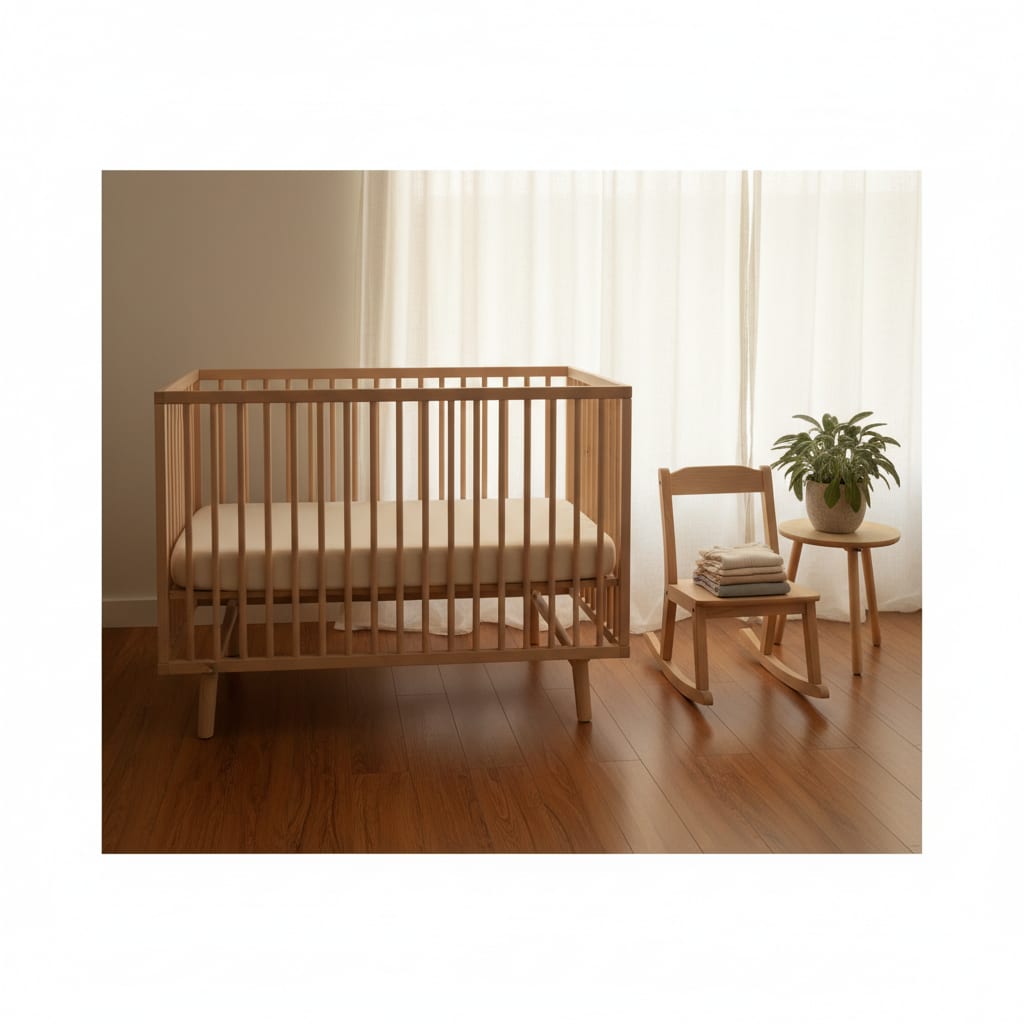
| Wooden crib | Yes | Made after June 2011, all original hardware, no drop side |
| Travel crib / play yard | Yes | Recall check, intact mesh, its own mattress pad |
| Bassinet | Usually | Recall check, stable base, firm flat original pad |
| Dresser, glider, changing table | Yes | Anchored to the wall once home |
| Sleep sacks and swaddles | Yes | Intact fabric and zipper, unweighted only |
| Sound machine, monitor | Yes | Working power supply, no camera account tied to a stranger |
| Crib mattress | No | Buy new — see below |
| Car seat | No, unless it’s family | Full history, in-date, never crashed |
| Inclined sleeper, crib bumper | Never | Illegal to sell, new or used |
Cribs are the best deal on this list. The federal crib standards that took effect in June 2011 banned drop-side rails and tightened slat, hardware and mattress-support requirements, so a crib manufactured after that date and sold complete is meeting the same rules as a new one. A crib from 2009 is not, however solid it looks.
Sleep sacks are the sleeper hit — good bamboo and merino sacks hold up through several children and resell constantly, which is one of the reasons I’m relaxed about paying more for them new in my Kyte sleep sack review.
The three you don’t buy used
Crib mattresses. A used mattress has a hygiene history you can’t see and a firmness history you can’t measure — foam and covers degrade, and firmness is a safety property rather than a comfort preference. There is also older case-control research that found an association between infants sleeping on a mattress previously used by another child and increased SIDS risk. That evidence is not settled and I won’t overstate it, but a new mattress is one of the cheapest components in the nursery: a Graco Premium foam crib and toddler mattress runs well under $100, is GREENGUARD Gold and CertiPUR-US certified, and has a washable waterproof cover. Put the savings from a used crib into a new mattress and you’re still ahead. If you want the certification decoder, it’s in my non-toxic crib mattress guide, and Betteroo’s crib mattress buying guide covers the firmness question well.
Car seats with an unknown history. A seat that has been in a crash may be compromised in ways that are invisible, and seats carry expiration dates — typically six to ten years from manufacture, printed on the shell. From a sibling or a close friend whose car you’ve been in, where you know the seat has never been crashed and it’s still in date, used is fine. From a stranger on a marketplace, you’re buying a story. New infant seats start around $200, and the Chicco KeyFit 35 is the reliable default.
Inclined sleepers and padded crib bumpers. The Safe Sleep for Babies Act, signed in 2022, banned the manufacture and sale of infant inclined sleep products and padded crib bumpers. That includes resale. The category earned it: Fisher-Price recalled roughly 4.7 million Rock ‘n Play Sleepers in 2019 after dozens of infant deaths, then re-announced the recall in 2023 because deaths were still occurring with units that had never been returned. Boppy recalled its newborn lounger in 2021 after eight infant suffocation deaths. These products are still listed secondhand. Do not buy them, do not accept them from a relative, and if one comes with a house or a hand-me-down bundle, dispose of it rather than passing it on.
The same logic covers anything sold for infant sleep with a soft, padded or inclined surface. Since the CPSC’s infant sleep products rule, anything marketed for babies to sleep in has to meet an existing federal standard — crib, bassinet, play yard or bedside sleeper. Older loungers, positioners and nap nests generally don’t, and their presence on a resale site is not an endorsement.
What secondhand actually saves
The math is worth doing honestly, because “buy used” is often advice about the wrong items. A used solid-wood crib saves $150 to $300. A used glider saves $200 or more. A used premium bassinet — the category where a four-figure smart bassinet lives — saves the most in absolute terms and carries the most homework, since app-based features and warranty terms don’t always transfer to a second owner. Check the manufacturer’s current policy, not the seller’s summary of it.
What secondhand doesn’t buy you is a better night. Gear is the smallest lever in the sleep equation, used or new — the schedule is the big one, and the Betteroo quiz will build an age-matched plan in about two minutes for nothing.
FAQ
Is it safe to buy a used crib?
Yes, if it was manufactured after June 2011, when the current federal crib standards took effect, and it comes with all its original hardware and no drop side. Check the model against current recalls, download the manual, and count the parts before assembling. Never substitute hardware-store screws for missing manufacturer parts.
Why can’t you use a secondhand crib mattress?
Firmness and hygiene are both safety properties, and neither is verifiable in a used mattress. Foam softens, covers fail, and you can’t see what has soaked into a core. There’s also older research associating previously used mattresses with higher SIDS risk — not conclusive, but pointing the same way as common sense.
Can you buy a used car seat?
Only when you know its full history — no crashes, in date, all original parts and labels. That standard is realistically met by a sibling’s seat, not by a marketplace listing. Check the expiry date stamped on the shell, and remember a seat that looks perfect can still be compromised after a crash.
How do I check whether used baby gear has been recalled?
Find the model number and date of manufacture on the product label, then search cpsc.gov/recalls and saferproducts.gov. Do this before you agree to buy. Recalls are sometimes re-announced years later, so check current listings rather than trusting the seller’s memory.
What about hand-me-down sleep sacks and swaddles?
Fine, and one of the best-value secondhand categories. Check the fabric for thinning and the zipper for function, wash before use, and make sure the armholes still fit snugly. The only hard exclusion is weighted sleep products, which aren’t recommended for infants at any age.
Final word
Secondhand is how sensible people afford a nursery, and most of the nursery is fair game — keep the mattress, an unverified car seat and anything inclined or padded off the list, and spend five minutes with a model number before every purchase.