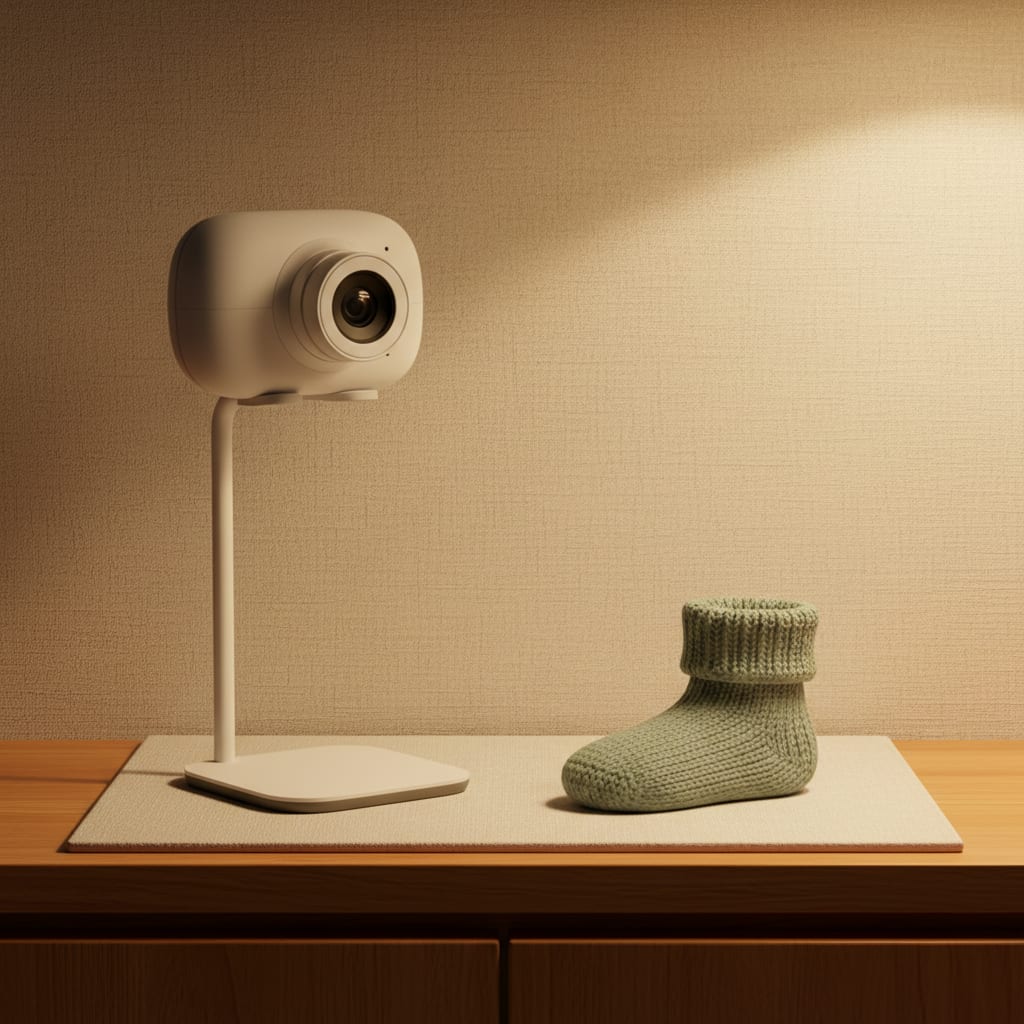
Bottom line up front: Nanit vs Owlet is not a head-to-head, because only one of them is a monitor in the everyday sense. Nanit is a 1080p overhead Wi-Fi camera that shows you the room, talks back, and infers sleep patterns from video. Owlet’s Dream Sock is a wearable pulse oximeter that reads your baby’s pulse rate and oxygen and alerts you when either leaves a set range. If you are buying your first device, buy the camera. The sock is an add-on for a particular kind of worry, and it is honest to say so out loud.
I have used both, bought with my own money, and affiliate links never change my verdicts.
The comparison table
| Nanit Pro | Owlet Dream Sock | |
|---|---|---|
| What it measures | Video, sound, motion, room temperature and humidity; breathing motion via a patterned band | Pulse rate and blood oxygen, plus sleep state |
| Regulatory status | Consumer camera | FDA De Novo clearance granted November 2023 as an over-the-counter infant pulse oximeter |
| Stated age/weight range | Birth through toddler years | Healthy infants roughly 1–18 months and 6–30 lbs |
| Works without a subscription | Yes — live stream, alerts, two-way audio | Yes — live readings and notifications |
| Paid tier | Nanit Insights, billed annually, roughly $100–$300/yr by tier | Owlet360, optional analytics layer |
| Fails when | Wi-Fi drops; mount is wrong | Sock slips, battery dies, baby outgrows range |
| Real cost driver | The subscription | The device price |
Every number above moves with promotions and plan changes — check current pricing before you commit, including this review’s.
What Nanit is genuinely good at
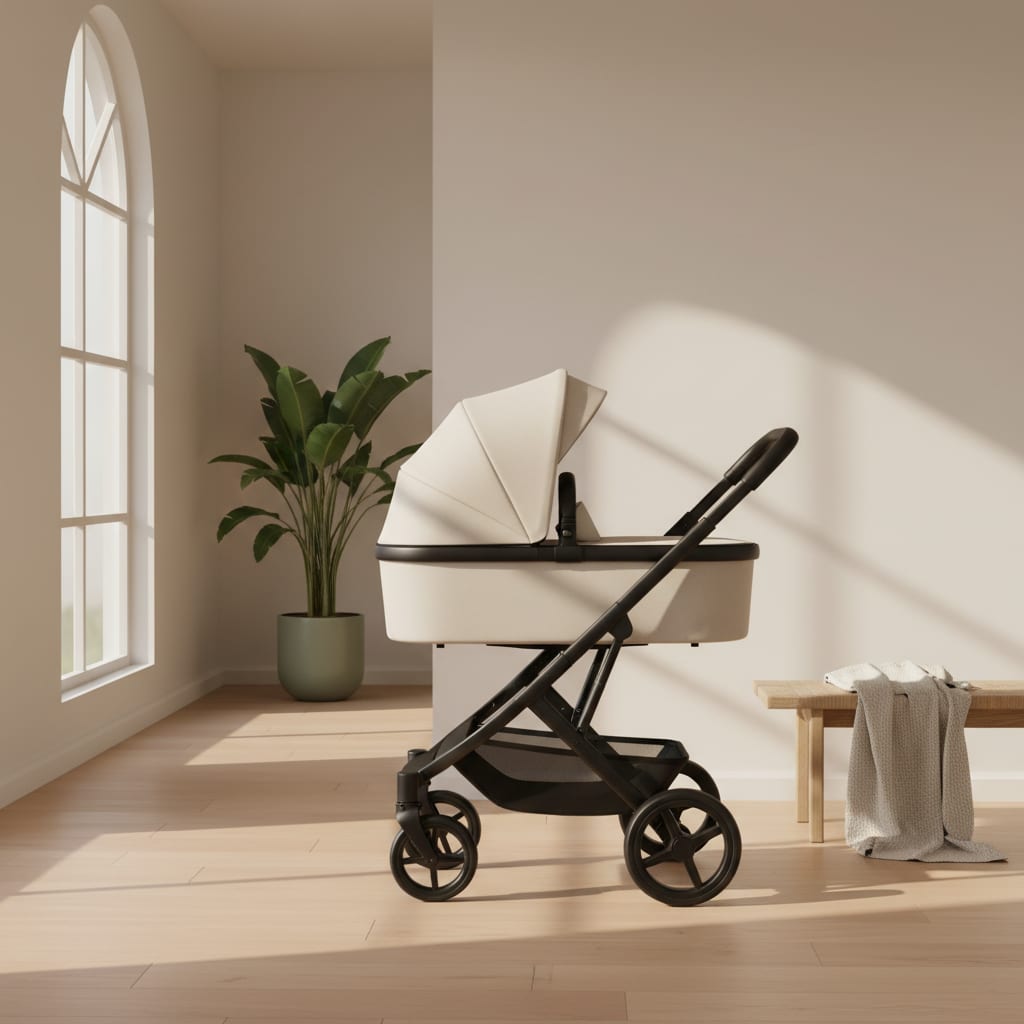
The overhead mount is the design decision that matters. A top-down view of the whole crib means you can see whether a baby is on their front, tangled in a sleep sack, or wedged against a corner, which a side-angle camera routinely cannot. Two-way audio, sound and motion alerts, the live 1080p stream, background audio and the room temperature and humidity readout all work with no subscription at all — a point Nanit does not advertise loudly and buyers should know. Nanit’s own entry plan ships free for a short introductory period on new cameras.
The paid Insights tiers unlock sleep analytics, video history and memory features. Whether that is worth roughly $100 a year at the base tier depends entirely on whether you will act on the data. I did for about three months and then stopped opening it.
The catch is the one every Wi-Fi monitor carries: it is an account, a cloud connection and a camera in your child’s room. If that is the part you cannot get comfortable with, the answer is not a different smart camera — it is a closed-circuit unit, which is the whole argument of my non-WiFi monitor roundup. Buy the Nanit Pro with the flex stand if you want the camera; the mount option matters more than the colourway.
What Owlet is genuinely good at
The Dream Sock is the more interesting object, and its history is part of the review. Owlet’s earlier Smart Sock drew an FDA warning letter in 2021 over its health notifications and came off the US market. The company went back through the regulatory process, and in November 2023 the Dream Sock received De Novo clearance as an over-the-counter pulse oximeter for healthy infants roughly one to eighteen months and six to thirty pounds. That is a real distinction, and it puts the current product in a different category from the one people argue about on forums.
What it buys you is a number where you previously had a guess. What it costs you, beyond money, is the occasional 3 a.m. alarm caused by a sock that shifted rather than a baby in trouble — and the adrenaline from a false alarm is not free. It also does not show you anything. Plenty of families end up with the Dream Duo bundle for exactly that reason, which is the honest tell: the sock is a supplement, not a monitor.
One thing neither device is: a way to reduce sleep risk. No consumer monitor of any kind is a substitute for a flat, firm, empty sleep surface and back sleeping. That is the baseline, and gear does not move it.
Two years of cost, not one
Price the subscription, not the box. A Nanit bought with a mid-tier Insights plan renewed for two years costs materially more than its sticker, and the plans are billed annually so the renewal arrives as one visible charge. Owlet inverts this: a higher up-front device price, with the analytics tier genuinely optional because the alerts work without it.
Run your own two-year number before you choose, the same way I do it for motion bassinets, where the useful-life window is what decides whether the purchase makes sense. Monitors have the opposite shape — a camera stays useful into the toddler years, while the sock’s stated range ends around eighteen months.
Buy A if, buy B if
Buy Nanit if you want one device that answers “what is happening in there” for the next three years, you are comfortable with a cloud camera, and you will either use the sleep data or decline the plan without guilt.
Buy Owlet if the specific thing keeping you awake is your baby’s breathing and vitals, you have a healthy infant inside the cleared age and weight range, and you would rather have an occasional false alarm than no data.
Buy both only if you have already tried one and can name what it failed to tell you. That is the only version of this purchase I have seen people not regret.
Buy neither if the real problem is that nobody in the house is sleeping. A monitor is an observation tool; it does not change the night. A schedule matched to your baby’s age does, and the two-minute quiz at Betteroo builds one for free — cheaper than either device and more likely to work.
FAQ
Is the Owlet Dream Sock FDA approved?
It is FDA cleared, not approved — a meaningful difference. It received De Novo clearance in November 2023 as an over-the-counter pulse oximeter for healthy infants, which makes it the first device of its kind authorised for direct consumer sale. It is not a medical device for diagnosing or preventing anything, and Owlet does not claim otherwise.
Do you need a subscription for Nanit or Owlet?
Neither, for the core function. Nanit’s live video, two-way audio, sound and motion alerts and temperature readout all work unsubscribed; Insights adds sleep analytics and video history. Owlet’s live readings and notifications work without Owlet360, which adds trends and summaries.
Which is safer, a camera or a sock?
Neither reduces sleep risk, and treating either as protection is the mistake worth avoiding. Safe sleep is a flat, firm, empty surface with the baby on their back. Monitors are for your information, not your baby’s safety.
Can I use Nanit with a non-WiFi setup?
No. Nanit is a Wi-Fi camera and requires a network and an account. If closed-circuit transmission is a requirement for you, shop the DECT and FHSS category instead — those units keep the video entirely inside your house.
Which should I put on a registry?
The camera, almost always. It is the device you will use every day for years, it works for siblings, and it holds resale value if you decide you are done with it. Add the sock later if a specific worry appears; buying both up front is how registries end up with duplicate answers to different questions.