Bottom line up front: my Lalo high chair review after months of daily meals lands at a solid recommendation — The Chair is the rare mid-priced high chair that looks like furniture, wipes down in under a minute, and converts to a toddler play chair that actually gets used. At around $200 it sits in the honest middle of the market: several times the price of the IKEA Antilop, roughly half the all-in cost of a fully-equipped Stokke Tripp Trapp. The trade-offs are a footrest that’s good rather than ergonomically great, and a tray my toddler eventually learned to pop loose. Here’s the full picture, cost math included.
I bought The Chair with my own money, used it daily through purees, baby-led weaning chaos and the yogurt era, and affiliate links never change my verdicts.
What the Lalo Chair is
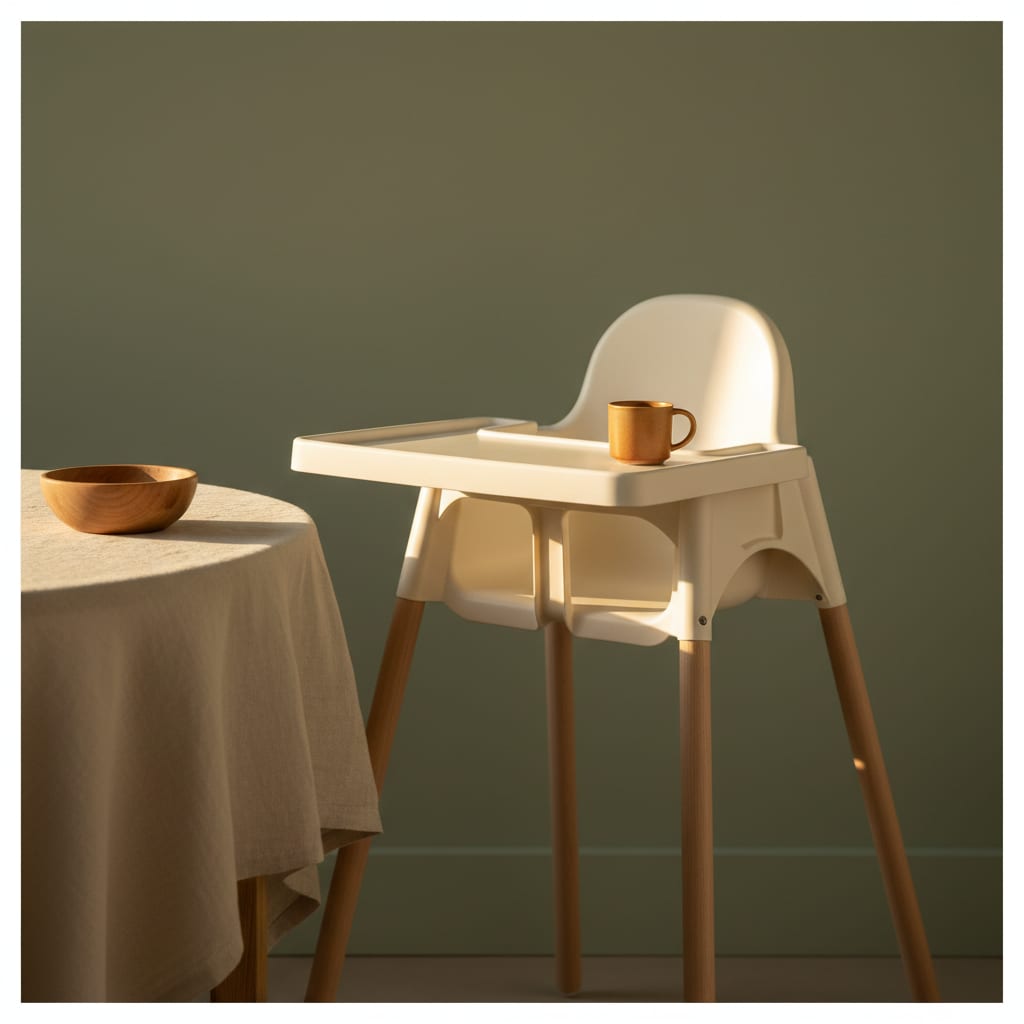
The Chair is a 3-in-1 from DTC brand Lalo: a full high chair with tray for the eating-in-a-chair-with-a-harness stage, then a conversion to a low toddler play chair once high-chair life ends — typically around age three. Beech-wood legs, a molded seat, a cushion, and a wraparound tray, in a palette of genuinely nice muted colors. It’s the high chair for people who stared at plastic-molded options and quietly despaired about their kitchen.
Daily use: where it earns its price
Cleanup is the headline. The seat is smooth, the cushion wipes, the tray cover comes off and rinses, and there is a conspicuous absence of the fabric crevices and strap labyrinths that make some high chairs a nightly archaeology project. Post-spaghetti reset in my kitchen: under a minute. Over three-plus meals a day for years, that’s the feature that matters most, and it’s why this chair holds its rating.
Assembly and footprint. Assembly took me under half an hour, no drama. The footprint is moderate — not the smallest in the class, but the legs tuck reasonably and it doesn’t dominate a small kitchen. If square inches are your binding constraint, my small-space high chair roundup ranks the field on exactly that.
The stage-two conversion. This is the quiet win. High chairs usually die in the basement when the harness stage ends; The Chair’s play-chair mode gave ours a second act at the little table where snacks and coloring happen. Cost-per-year math loves an item with two lives.
Where it loses points
The footrest. Adjustable, but coarser and less supportive than the gold standard. Proper foot support genuinely matters for early eaters — dangling feet make for squirmy, less stable meals — and while The Chair is adequate here, the Tripp Trapp’s infinitely-adjustable platform is the benchmark it doesn’t meet.
The tray pop. Around the 18-month mark my kid discovered the tray could be dislodged with determined two-handed effort. Not a safety event in a harnessed child, but a mess multiplier and an invitation to a game you will not enjoy. The wraparound design that makes it easy for adults to remove is the same property that makes it discoverable.
Cushion lead time. The cushion is comfortable and wipeable but shows wear faster than the wood and plastic; ours looked loved well before anything else did. Replacements exist but are one more DTC order.
The cost math
The comparison set, priced honestly:
IKEA Antilop, around $20–$30. The floor of the market, and a genuinely good chair — easy to clean, easy to abandon at grandma’s. No conversion, no footrest without an add-on, and aesthetics best described as “cafeteria.” Cost per year: trivial.
Lalo The Chair, around $200. Two stages, call it five-plus years of useful life across high-chair and play-chair modes — roughly $40 a year, less with a second kid inheriting it.
Stokke Tripp Trapp, around $300 for the chair alone. The baby set, tray and cushion are separate purchases that push a full infant setup toward $400, hedged for the frequent price changes. Its counter-argument is a lifespan measured in decades — it converts all the way to an adult-usable chair — so its cost per year eventually beats everything if you actually keep it that long.
The honest framing: the Antilop wins if a high chair is purely a tool. The Tripp Trapp wins if you’ll genuinely use it for a decade and want the best ergonomics. The Lalo wins the middle — most of the Tripp Trapp’s looks and cleanability for roughly half the all-in cost, plus a conversion the Antilop can’t offer. That middle is where most families actually live.
FAQ
Is the Lalo high chair worth it?
If you want a high chair that looks like furniture and cleans in under a minute, yes — at around $200 it’s the best-executed mid-market option I’ve tested. If budget rules, the IKEA Antilop does the core job for a tenth of the price; if decade-long ergonomics rule, the Tripp Trapp justifies its premium.
When can a baby start using the Lalo Chair?
It’s designed for the sitting-independently stage — around six months, when solids typically begin — with the usual caveat that readiness for solids is a pediatrician conversation, not a furniture spec. Use the harness for the entire high-chair stage.
Is the Lalo Chair easy to clean?
The easiest I’ve tested at any price: smooth molded seat, wipeable cushion, rinseable tray cover, no fabric traps. This is its single biggest daily-life advantage, and it compounds over years of meals. Pair it with an easy-clean cup — my non-toxic sippy cup picks — and the post-meal reset stays painless.
Lalo vs Tripp Trapp — which should I buy?
Lalo for cost and cleanup, Tripp Trapp for footrest ergonomics and multi-decade lifespan. The all-in gap is roughly $200 once the Tripp Trapp’s infant accessories are added. If you’re unsure you’ll keep any chair for ten years, the Lalo math wins.
Final word
The Chair does the unglamorous things — cleanup, looks, a useful second life — better than anything near its price, and its flaws are annoyances rather than dealbreakers. That’s a 4 out of 5 in this house, and the chair is still at our table.