Bottom line up front: most of the baby industry sells solutions to problems that take two minutes to solve for free, and three of the most heavily marketed items are not safe for infant sleep at all. I bought a distressing number of these myself, with my own money, across two babies. This is the list I wish someone had handed me before my first registry. Affiliate links never change my verdicts, and there are no links at all on the things I am telling you not to buy — a recommendation link on a product I am warning against would be a contradiction.
The safety skips: three things that should not be on a registry
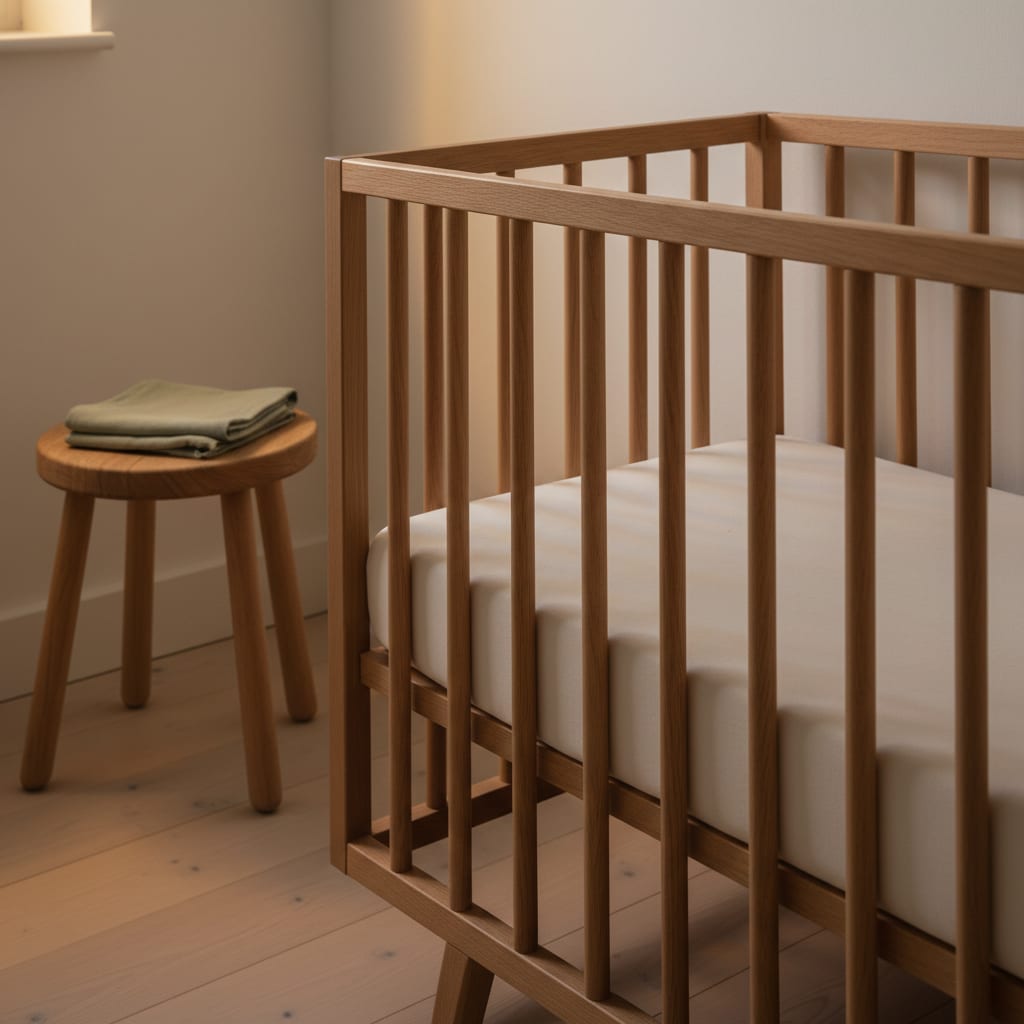
1. Crib bedding sets. The matching quilt, the decorative pillow, the padded bumper. Infant sleep surfaces are firm, flat and empty — a fitted sheet and nothing else. Padded crib bumpers were banned from sale in the US under the Safe Sleep for Babies Act, and the rest of the set is decoration you cannot use.
2. Sleep positioners and anti-roll wedges. Sold as reflux or positioning aids, and not appropriate for infant sleep in any form. Federal regulators have warned about them repeatedly. Nothing goes in the sleep space with the baby.
3. Inclined sleepers. Also covered by the same 2022 law after a long recall history. If a sleep surface is not flat, it is not a sleep surface. This is worth knowing before you accept a hand-me-down, which is the whole subject of my secondhand sleep gear guide.
The convenience gadgets that solve a two-minute problem
4. The wipe warmer. Wipes are room temperature. Babies survive room temperature. The warmer dries out the top wipes, occupies an outlet and needs cleaning.
5. The bottle warmer. A mug of hot tap water warms a bottle in about the same time and costs nothing. Worth reconsidering only if you are exclusively pumping and warming eight bottles a day at speed.
6. The dedicated bottle sterilizer. A dishwasher run with a hot water and heated drying cycle sanitizes, and so does a pan of boiling water. Daily sanitizing genuinely matters for babies under three months, preemies and immunocompromised infants — but you already own the equipment to do it.
7. The UV toy sanitizer. A wipe with soapy water is the standard advice for toys, and it works. This is a countertop appliance sold on anxiety.
The furniture that duplicates something you already own
8. The changing table. A dresser you will still be using in ten years, plus a contoured pad strapped to the top, does the identical job in the identical footprint. A contoured changing pad with high curved sides and a safety strap runs a small fraction of the furniture price.
9. The proprietary diaper pail. The pail is cheap; the refill cartridges are the business model, and you buy them for two and a half years. A lidded bin with ordinary liners, emptied daily, smells the same.
10. The baby food maker. It steams and it purées. So does a saucepan and any blender you own. Many families skip purée entirely for baby-led weaning and never miss it.
11. The bassinet you buy alongside a playard. If you own a playard with a full-size infant bassinet insert, you have a newborn sleep surface, a travel crib and a toddler pen in one object. Buying a separate bassinet on top is paying twice for four months.
The clothing and gear that arrives, then leaves
12. Baby shoes before walking. A pre-walker needs bare feet or socks for grip and foot development. Shoes are for photographs, and they fall off in car parks.
13. Newborn-size clothing in bulk. Some babies never wear it. Others wear it for nine days. Buy a handful, keep the tags on, and let the baby’s actual size decide the rest.
14. The hooded towel collection. Any towel dries a baby. The hood is charming for a month, and then you have six of them and a linen cupboard problem. Two is plenty, which is roughly the logic behind everything on my hospital bag list.
The reassurance purchases
15. The baby scale, and the three-device smart nursery. Weight checks at your paediatrician’s office are free, more accurate and come with a person interpreting them; a home scale mostly produces 2 a.m. arithmetic. The same logic applies to stacking an app-connected monitor, an app-connected sound machine and an app-connected nightlight: three accounts, three firmware updates, and one unchanged night. If you want the sound machine, buy the one that does exactly one thing — a mechanical unit like the Yogasleep Dohm turns on with a switch and never asks anything of you again, which is why it keeps winning my white noise testing.
What to buy instead with the money
Very little, honestly. A plain wearable blanket replaces the entire crib bedding set for roughly $20 and is the only bedding a baby needs. A contoured pad replaces the changing table. Everything else on this list is money that belongs in the car seat, the stroller or your own savings account — the three purchases that genuinely reward spending more, and the reasoning behind my minimalist registry.
And if the reason you are shopping at midnight is that nobody in the house is sleeping, no object on this page fixes that. Timing does. Betteroo’s guide to an overtired baby is free and it addresses the actual variable, and the two-minute questionnaire builds an age-matched plan if you want the structured version.
FAQ
What is the most common baby registry mistake?
Buying furniture and gadgets before the baby arrives. Most of this list is bought in the third trimester on the strength of a product description, and almost none of it survives contact with an actual newborn. Register for the big three, wait on everything else.
Are crib bumpers really banned?
Padded crib bumpers and inclined infant sleepers were prohibited from sale in the US under the Safe Sleep for Babies Act, signed in 2022. That does not stop them circulating second-hand or appearing in older bedding sets, so check anything handed to you.
Do I need a bottle sterilizer for a newborn?
Not a dedicated appliance. Sanitizing daily matters for infants under three months, babies born prematurely and those with weakened immune systems — but a dishwasher sanitize cycle or a few minutes in boiling water achieves it with equipment you already own.
What should I spend more on instead?
The car seat, the stroller if you walk a lot, and the mattress. Those three get used daily for years, and the difference between the cheap and the good version is something you feel every single day rather than once.
Is it worth buying any of these second-hand?
The safety three, never — not new, not used, not free. For the rest, second-hand is usually fine, but check current recall listings by model and date of manufacture before anything goes into service.