Bottom line up front: the pacifier is simultaneously one of the best sleep purchases you’ll make — a couple of dollars for genuine soothing power, with safe-sleep guidance from the AAP actually favoring pacifier use at sleep times in the first year — and one of the only products in the nursery that can start charging you interest. The moment a baby needs the pacifier to fall asleep but can’t find and replace it independently, you become the replug service, on call all night. So the honest answer to “keep it or lose it” is a timing question, and this post treats it the way I treat all gear: what it costs, what it pays, and when the math flips.
Usual signposts up front: the safe-sleep specifics — offering at sleep times, not reattaching it once it falls out, no clips or tethers in the crib — are AAP territory, and your pediatrician is the referee for your baby, especially around breastfeeding establishment or ear-infection history. I’ve run the full arc twice: one kid who never took a pacifier at all, one who loved it deeply and made me regret nothing and everything.
The pacifier as gear: types compared
For an object this small, the market is weirdly deep. The real differences:
One-piece silicone (the Philips Soothie class, roughly $4–$8 for two). Hospital-standard, dishwasher-safe, nothing to separate or trap gunk. The engineering-minimalist pick and my default recommendation for the newborn months.
Lightweight one-piece with a small shield (the BIBS-style class, roughly $8–$15 for two). The design win nobody advertises properly: some shapes are dramatically easier for a four-to-six-month-old to grab and self-replug, which directly shortens the era where you’re the replug service. Watch ventilation holes and shield size against the brand’s age guidance.
Two-piece latex or specialty shapes. Latex is softer but wears faster, needs replacing more often, and latex allergy is a real consideration — flag it with your pediatrician. Multi-piece construction is one more seam to inspect; pacifiers are one category where I check for wear weekly and toss at any sign of damage, per every manufacturer’s own fine print.
The plush-attached “wubbanub class” (roughly $15–$20). Beloved, effective, and self-limiting: the attached animal typically ages out when rolling starts per safe-sleep practice, so treat it as a supervised-naps-and-car accessory with a short service life, not a crib solution.
Cost across the whole arc — a rotating fleet of six to eight pacifiers, replaced on wear — lands somewhere around $30–$60 total. As hardware, it’s the cheapest line item in the entire sleep kit. The costs that matter are elsewhere.
The sleep-association ledger
Here’s the trade at the center of it. A pacifier is a sleep association — part of the set of conditions your baby links with falling asleep. Associations aren’t bad; a dark room and a consistent bedtime routine are associations too. The relevant question, which I first saw framed cleanly in Betteroo’s sleep-association material, is whether the association is one the baby can reproduce alone at 2 a.m. Babies surface between sleep cycles all night; a baby who fell asleep sucking and wakes without the pacifier often can’t bridge the cycle without a staff member.
The credit side: real soothing power in the newborn months, the AAP’s noted association between sleep-time pacifier use and reduced SIDS risk in the first year (their guidance, not my claim — read it and talk to your pediatrician), calmer car rides, and a sanity valve during evening fussiness that costs a few dollars instead of an hour of bouncing.
The debit side: the replug tax. In the window after the newborn months and before reliable self-replugging — commonly somewhere in the four-to-eight-month range, though kids vary widely — a pacifier-dependent baby can bill you several wakings a night that are purely about the missing object. Multiply a few replug visits by 90 nights and you’re paying hundreds of service calls for a $5 device. That’s the subscription clause, and it’s the same fine print I flag in every gear review: the sticker price is not the price.
The debit side, later: past roughly age one the SIDS-related rationale has aged out, and dental and speech-development considerations gradually enter the picture with long-term, frequent use — magnitude debated, direction generally agreed, details firmly in ask-your-pediatric-dentist territory.
When the math flips: keep, coach, or cut
Keep, freely: the newborn months. The benefits column is at its peak, dependence is shallow, and about a third of babies (mine included, once) simply refuse pacifiers anyway — a refusal you don’t need to fight.
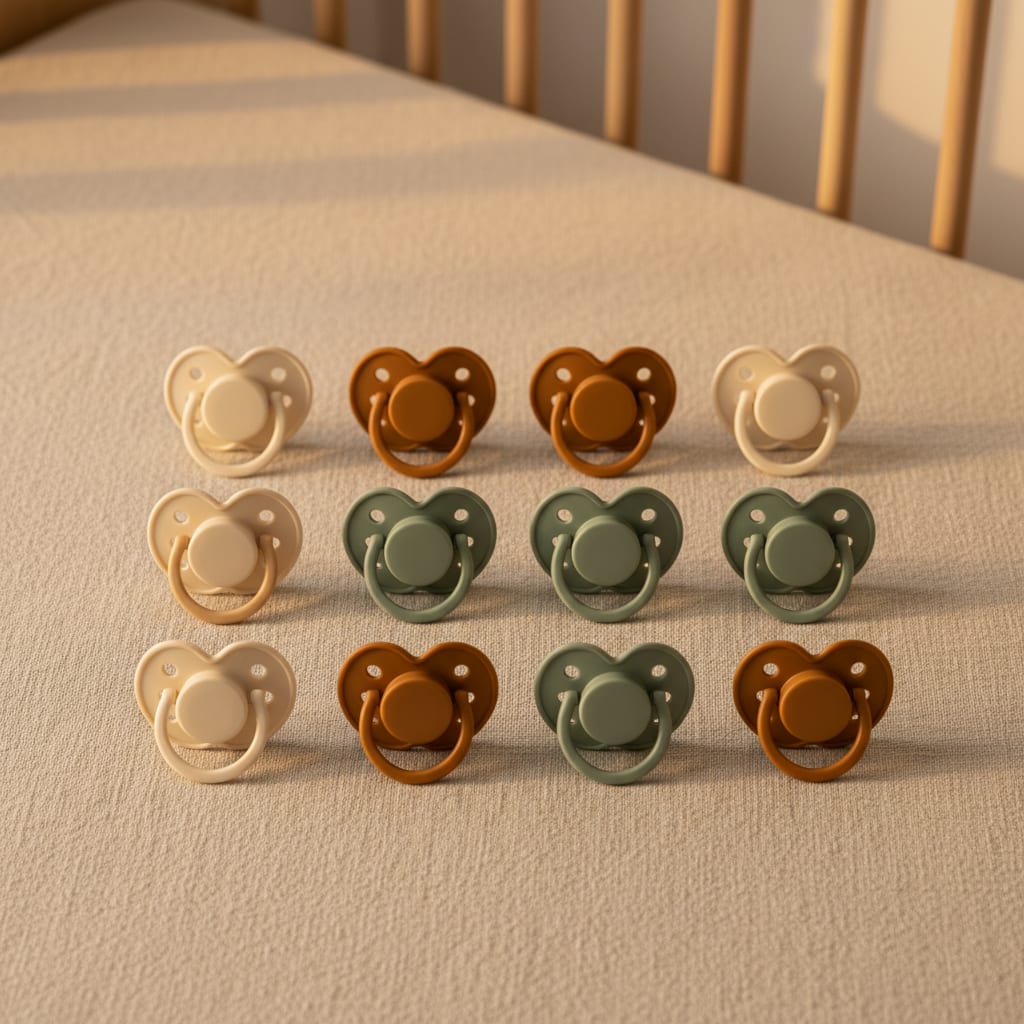
Coach, if keeping: once grabbing develops, tilt the game toward self-service — easier-to-grab shapes, a few practice runs at putting it back in during the day, several pacifiers scattered in the crib for higher 2 a.m. hit rates (sleep-consultant folk wisdom that costs $10 to try). If self-replugging clicks, the subscription cancels itself and the pacifier can ride along until toddler weaning.
Cut, deliberately: if you’re deep in the replug-tax window and self-service isn’t coming, earlier weaning is usually the cheaper trade — a few rough nights of protest against months of nightly service calls. Cold-turkey at sleep times is the common consultant recommendation at this age precisely because it’s the shortest path. This is exactly the kind of one-variable-at-a-time decision where a structured plan beats improvising; a personalized plan like Betteroo builds sequences the pacifier question inside the rest of your baby’s schedule — wake windows, routine, temperament — instead of treating it as an isolated battle. (My full hands-on take is in the Betteroo review.)
For toddlers, the pacifier-fairy and build-a-bear rituals genuinely work and cost little; past that age it’s a negotiation, not a sleep-engineering problem.
If you’d rather get a plan tuned to your actual baby than adjudicate this from blog posts: take the two-minute Betteroo sleep quiz — it asks about pacifier use directly and folds the keep-or-lose call into the schedule it builds.
FAQ
Does a pacifier really reduce SIDS risk?
The AAP’s safe-sleep guidance notes an association between pacifier use at sleep times and reduced SIDS risk in the first year, and recommends offering one at naps and bedtime once feeding is established — with specifics (don’t force it, don’t reinsert once asleep, no tethers) that are worth reading in the original. How that applies to your baby is a pediatrician conversation, not a blog verdict.
When can babies replug their own pacifier?
The hand skills typically arrive somewhere around six to eight months, with wide normal variation — and skill isn’t the same as 2 a.m. reliability, which often lags by weeks. Easier-grip pacifier shapes, daytime practice and multiple pacifiers in the crib all raise the odds. Until self-service is consistent, assume every night-waking plan has to account for the replug tax.
Is it easier to wean at 7 months or 2 years?
Different problems. Infant weaning is a few nights of protest with no negotiation and no memory; toddler weaning is a smaller sleep disruption but a genuine persuasion campaign with a person who has opinions and object permanence. The commonly recommended windows are either before the association deepens (roughly six to twelve months) or after real understanding arrives (around age two to three). The worst spot is drifting between them without deciding — which is the actual thesis of this post.
Will losing the pacifier ruin sleep permanently?
No — associations transfer. The first nights are the loudest, then babies attach to whatever reliably remains: the routine, the sack, the dark room, the sound machine. Keep every other cue identical while you drop the pacifier, change one variable at a time, and expect roughly a week of adjustment rather than a new era.