Bottom line up front: the best pregnancy pillow for most people is a U-shape if your bed can spare the room, a C-shape if it can’t, and a humble wedge if you’d rather spend $25 than $120 — and at typical prices, even the premium lane costs less than a dollar per night of use. The shape decision matters far more than the brand decision, so this guide is organized the way the purchase actually works: by how you sleep and what you want to spend.
I bought three of these across two pregnancies — one impulse, one researched, one replacement — and this is the guide I wish had existed before the impulse one. Affiliate links never change my verdicts.
Why shape beats brand
Pregnancy pillows are a category where the physics is simple and the marketing is not. Every pillow here is solving the same three problems: keeping you on your side (the position OB providers generally recommend favoring in the second half of pregnancy), supporting the bump so your lower back stops compensating, and putting something between your knees so your hips stay stacked. Four shapes cover the whole market:
- Wedge — a small foam triangle that tucks under the bump or behind your back. Cheapest, smallest, travels well.
- Full-length straight body pillow — the plain column you hug. Simple, cheap-ish, but supports only one side of you at a time.
- C-shape — curls behind your back and between your knees, or reverses to cradle the bump. The bed-space compromise.
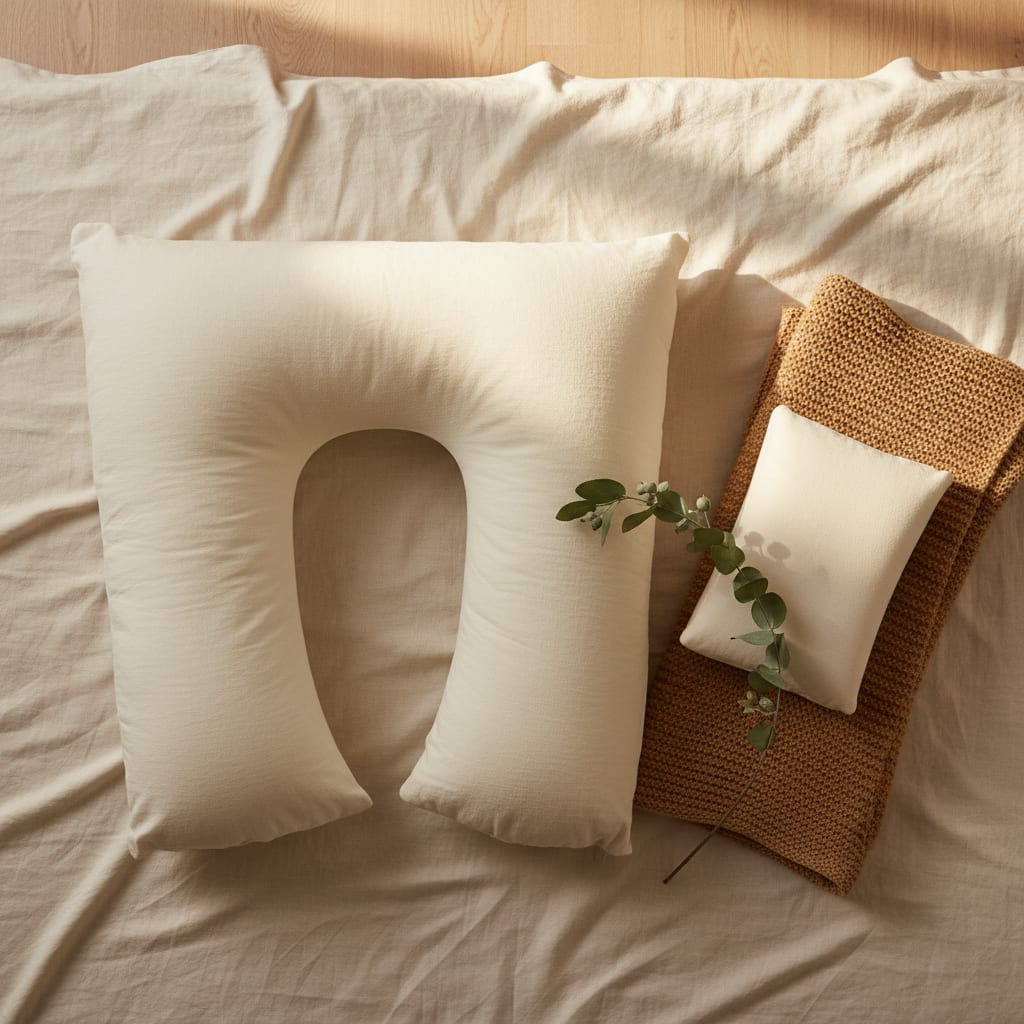
- U-shape — surrounds you on both sides, so back support and bump support don’t require repositioning when you flip. The heavyweight, literally: these take up a real chunk of a queen bed.
Models within each shape differ mainly in fill (polyester fluff, shredded memory foam, microbeads), cover fabric, and whether the cover zips off for washing — and a washable cover is non-negotiable, for reasons the third trimester will explain to you.
The comparison table
| Shape | Typical price | Bed space cost | Best for | Postpartum reuse |
|---|---|---|---|---|
| Wedge | ~$20–$40 | Almost none | Budget buyers, travel, targeted bump support | Reflux elevation, propping |
| Straight body pillow | ~$25–$60 | One pillow’s width | Minimalists, hot sleepers | Regular body pillow |
| C-shape | ~$40–$90 | Half a side | Side sleepers sharing a bed | Nursing support |
| U-shape | ~$60–$150 | A whole side | Combo sleepers, back-pain sufferers | Nursing support, toddler barricade |
No shape wins every row. The U-shape’s superpower — support on both sides at once — is exactly what makes your partner file a complaint.
Picks by sleep style
Dedicated side sleepers: the Leachco Snoogle Original (roughly $50–$70). The C-shape that defined the category, and still the one I’d buy: about 60 inches of horseshoe that holds the bump, separates the knees and supports the neck without evicting anyone from the bed. Removable, washable cover — non-negotiable in a pillow you’ll sweat into for four months. My one note: buy it firmer rather than softer if you have the choice. A pillow that has flattened by week 32 fails exactly when you need it most.
Former back sleepers: the PharMeDoc U-Shape (roughly $50–$80). If your body keeps trying to roll flat, the U-shape is the one that physically argues back — the rear arm blocks the roll and the front arm gives you something to anchor to. This one runs about 53 by 31 inches with a jersey-cotton removable cover, and its detachable extension arm means you can run it as a U or unclip down to a C on nights your partner has opinions. The difference from a C-shape wasn’t comfort for me, it was staying in position at 3 a.m. without conscious effort.
Combo sleepers who flip all night: the same U-shape, or the Coop Home Goods Adjustable Body Pillow if you run hot (roughly $70–$90). Flipping inside a U means turning your body while the support stays put — no dragging a pillow over you six times a night. The honest trade: all that loft holds heat. The Coop is the cooler-running compromise — a 20-by-54-inch column of cross-cut memory foam and microfiber you can unzip and remove fill from until it’s the exact loft you want, then hug or abandon at will.
Budget lane, any sleep style: the Boppy Wedge (roughly $18–$25). A firm wedge under the bump plus a regular pillow between the knees replicates most of what the big shapes do, for the price of a takeout dinner. It’s also the only option here that fits in a suitcase, which matters if there’s a babymoon on the calendar, and it keeps working after birth for propping during feeds. If the knee pillow is the part you’re improvising, a firm standard pillow like the Lincove Classic Hotel Collection is the version that doesn’t compress flat by 2 a.m. — the same triple-chamber build I liked in my Lincove pillow review.
The cost-per-night math
This purchase looks expensive until you divide it. Most people start wanting real support somewhere around week 20 and use the pillow nightly to delivery — call it roughly 140 nights.
- Wedge at ~$30: about $0.21 per night.
- C-shape at ~$60: about $0.43 per night.
- U-shape at ~$120: about $0.86 per night.
And that denominator is understated, because the C and U shapes moonlight as nursing-support pillows for months afterward — my U-shape logged nearly a year of total service. Compare that to what a stretch of genuinely bad sleep costs you in the third trimester, and this is one of the cheapest interventions in the entire baby budget.
One planning note: this is a buy-now item, not a registry item — you need it months before the shower. Save the registry slots for the 27 things you’ll actually use after the baby arrives. And enjoy the irony that the pillow solves your sleep just in time for the baby to un-solve it; when that project starts, a plan helps more than any gear did — my Betteroo review covers the one that worked for us.
FAQ
When should I start using a pregnancy pillow?
Whenever ordinary pillows stop working — for most people that’s somewhere in the second trimester, around weeks 18 to 24, when the bump gets heavy enough to drag on your back in side-lying. Buying earlier doesn’t hurt; buying later just means fewer supported nights for the same money.
Is a U-shape or C-shape better?
U-shape if you flip sides at night or fight the urge to roll onto your back, and if your bed has the room. C-shape if you sleep on one side, share a standard queen, or want to spend less. The U is more supportive; the C is more livable. That’s the whole decision.
Can I just use regular pillows instead?
Yes, honestly — one between the knees, one under the bump, one behind the back replicates the geometry. The catch is that three loose pillows migrate and need reassembly every time you turn over, which is exactly the 3 a.m. task the shaped pillows exist to delete. Try the free version first; buy the shaped one when the reassembly gets old.
Which fill sleeps coolest?
Plain polyester fill in a cotton cover generally runs cooler than shredded memory foam, which holds heat the way foam does. If you run hot, prioritize a breathable cotton or bamboo-rayon cover and skip the densest foam fills — and consider the straight body pillow, which simply has less material wrapped around you.
Are pregnancy pillows worth it for back pain?
They’re one of the better-value things you can try, since the mechanism — stacked hips, supported bump, side position held all night — directly addresses the strain. They’re not a treatment for genuine sciatica or pelvic girdle pain; that conversation belongs with your provider, with the pillow as backup rather than plan A.