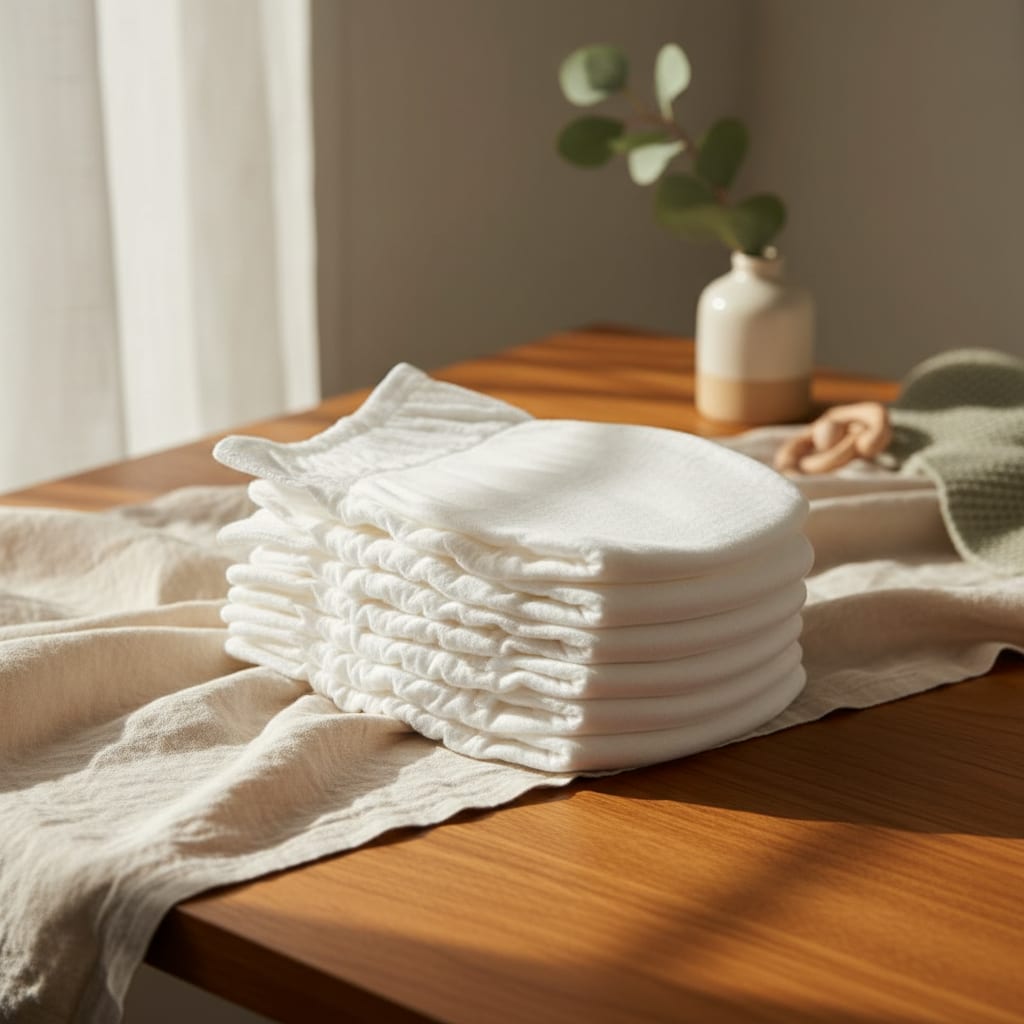
Bottom line up front: Coterie earned 4.5 stars from me after six months and well over a thousand diaper changes, because it flatly outperformed everything else I tested on absorbency and blowouts. The only reason it is not a blanket recommendation is the price, which is real and relentless — and for a lot of families, a mid-range diaper plus a booster pad gets you most of the way there for far less.
I bought every box myself — no free samples, no brand outreach, and affiliate links never change my verdicts. Here is what the diaper actually did in my house.
How I tested Coterie diapers
This review is backed by research and my own testing, not a weekend with a sample pack. My daughter wore Coterie as her primary daytime and overnight diaper for six months, and I ran week-long rotations against two popular mid-range brands during that window so I was comparing the same baby, the same diet, and the same sleep stretches. I tracked leaks, blowouts, and rash flares in a notes app because I am exactly that kind of person.
Absorbency: the overnight test
My daughter is a heavy overnight wetter, and Coterie was the first diaper that consistently made it 11 to 12 hours without a leak. In the same week-long rotations, each of the mid-range brands leaked at least twice per week. Coterie leaked once in six months, and that one was a user error at 3 a.m.
The material also wicks noticeably faster. When I poured water on the surface of each diaper at the kitchen counter, Coterie’s topsheet felt dry to the touch within seconds; the comparison diapers stayed damp for closer to a minute. That wicking speed matters for rash-prone skin, because it is the wet-skin contact time — not the pee itself — that drives most irritation.
Blowouts and fit
Across six months I logged four blowouts in Coterie versus eleven in the same span the previous six months with other brands. The back waistband is taller and stretchier than anything else I have used, and that is where most of the difference comes from.
On fit: Coterie runs generous through the thigh and slim through the waist on my kids. If your baby is between sizes, my experience says size down for containment and size up for overnight capacity — and check the current size chart on the listing, because sizing has been adjusted over time.
What Coterie is made of, briefly
Coterie markets itself as a “clean” diaper: fragrance-free, lotion-free, chlorine-free processing, and third-party testing claims for various nasties. Based on my label reading, that positioning is fair — but so is the counterpoint that most major diapers today are also fragrance-free and totally-chlorine-free. If ingredient anxiety is your main driver, read my non-toxic baby shampoo guide for the label-reading method; it transfers directly to diapers. The honest differentiator here is performance, not purity.
The cost math, honestly
This is where the shine wears off:
| Diaper tier | Rough cost per diaper | Monthly cost at 8 changes/day |
|---|---|---|
| Coterie (subscription) | around $0.40–$0.50 | roughly $95–$120 |
| Strong mid-range brand | around $0.20–$0.28 | roughly $50–$65 |
| Warehouse-club value brand | around $0.15–$0.20 | roughly $35–$50 |
Prices move around, so treat these as ranges and check the current listing — but the gap itself is stable. The difference is roughly $45 to $60 per month, or over $600 per year, versus a good mid-range diaper.
Backed by that math, my honest position is: pay for Coterie during the newborn-to-crawling stage, when leaks and rashes are constant, then reassess. Nobody needs a luxury diaper on a potty-training toddler. If you want to see how the value end of the market performs, my Kirkland vs. Pampers head-to-head is the other half of this conversation.
Who should skip Coterie
- If your current diaper is not leaking, you are buying softness you will not notice at 3 a.m.
- If budget is tight, a mid-range diaper plus an overnight booster pad solves the sleep problem for a third of the price.
- If you cloth-diaper part-time, the per-diaper premium makes even less sense.
- If your baby is nearly potty-training age, run out the clock on something cheaper.
Who should actually buy it
- Heavy overnight wetters whose parents have tried two or more brands and are still doing 2 a.m. sheet changes.
- Babies with recurring contact rash where faster wicking genuinely helps.
- Families where the diaper budget is simply not the constraint — in which case, yes, it is the best one.
FAQ
Are Coterie diapers worth the money?
For most families, honestly, no — a good mid-range diaper does the job for half the price. Coterie is worth it in two specific cases: a heavy overnight wetter who leaks through everything else, or persistent rash that clears up with faster-wicking material. If neither applies, put the difference toward wipes and coffee.
Do Coterie diapers run big or small?
In my experience they run generous in the thigh and trim in the waist, and I found the weight ranges on the size chart realistic. When my daughter was between sizes, sizing up bought overnight capacity and sizing down bought blowout containment. Check the current listing’s chart before you subscribe, since sizing gets revised.
How much do Coterie diapers cost per month?
At a typical eight changes a day, expect somewhere around $95 to $120 per month on subscription, depending on size — roughly double a solid mid-range brand. The subscription discount is real but modest; the savings lever that matters is changing your baseline brand, not optimizing the coupon.
Is there a cheaper diaper that performs close to Coterie?
Overnight, a mid-range diaper with a booster pad got me about 80 percent of Coterie’s performance in my own testing. Daytime, the gap is smaller still. That combination is what I recommend first to friends on a budget — see my minimalist registry checklist for where diapers fit in the bigger budget picture.
Final word
Coterie is genuinely excellent, and I kept subscribing with my own money — that is the strongest endorsement I can give. But it is a considered purchase, not a default. Run the monthly math for your change count before you commit, and if the numbers make you wince, start with the Kirkland vs. Pampers comparison instead.